
Promotion Mix for Interviews: Choose the Right Advertising, PR, Sales Promotion and Direct Digital Tools
A beauty brand launches the same serum twice. The first launch shouts through ads and discounts, gets a spike, then disappears; the second builds dermatologist credibility, influencer chatter, retargeting, festive offers and CRM nudges - and keeps selling after the launch week.
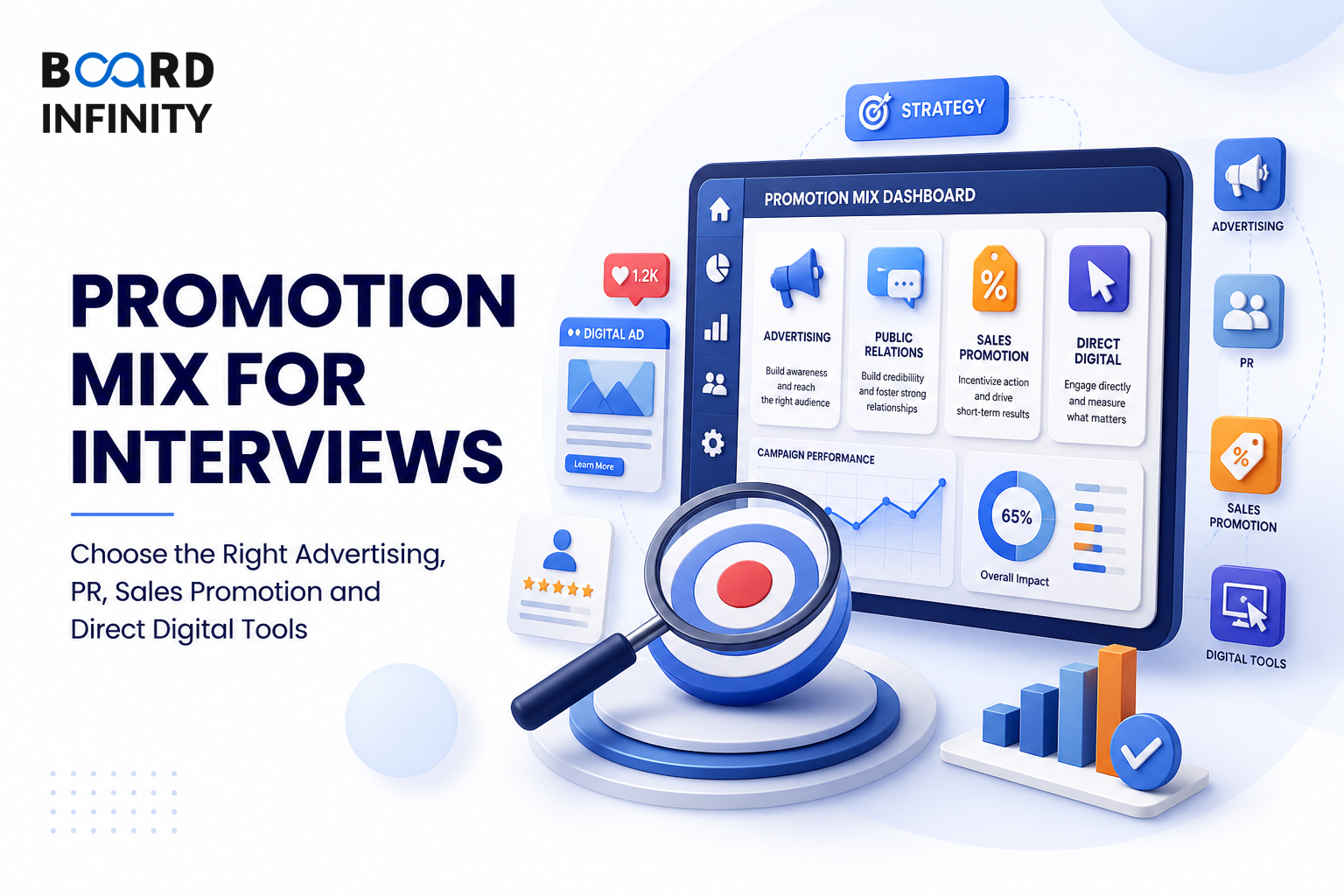
- Promotion mix is the blend of communication tools used to inform, persuade and remind customers.
- The four core tools here are advertising, public relations, sales promotion, and direct and digital marketing.
- Advertising buys reach and control; PR earns credibility; sales promotion creates urgency; direct and digital personalise and measure response.
- Good promotion is not “do everything” - it matches the tool to the objective, audience, buying stage and budget.
- Use the funnel logic: awareness needs reach, consideration needs proof, conversion needs triggers, retention needs direct relationship building.
- Measure the mix through reach, frequency, CTR, conversion rate, CPA, redemption rate and incremental sales lift.
- The biggest interview mistake is listing tools without explaining why each tool fits the customer journey.
Big Picture: Promotion Mix Is the Communication Engine
Think of promotion mix as a campaign control panel. The marketer first chooses the business objective and target segment, then combines tools so the customer receives one coherent message across paid, earned, owned and direct touchpoints.
Core Explanation: The Four Tools and When to Use Them
The promotion mix is not a menu to tick off. It is a set of levers with different strengths. The right answer depends on what the brand needs most - reach, trust, urgency, response or relationship.
Advertising is paid, non-personal communication through media such as TV, print, outdoor, cinema, audio, social, search and video. It is strongest when the brand must create mental availability at scale.
Public relations uses earned or relationship-based communication - news coverage, founder stories, expert endorsements, community events, investor communication and crisis management. It works because third-party credibility can say what an ad cannot say as persuasively.
Sales promotion gives the customer or channel a temporary incentive to act now - price-off, coupons, cashback, samples, contests, bundles, dealer schemes or limited-period offers. It is powerful for conversion but dangerous if it becomes the brand’s only reason to buy.
Direct and digital marketing includes email, SMS, WhatsApp, app notifications, CRM, performance ads, search, social, influencer content, landing pages and marketing automation. Its advantage is precision - the brand can target, personalise, measure and optimise.
How to Build a Promotion Mix: A Practical Five-Step Process
Metrics: How to Judge Whether the Promotion Mix Worked
Interviewers like candidates who can move from “nice campaign” to “measurable business impact.” Use a mix of exposure, engagement, conversion and incrementality metrics.
Quick-commerce platforms in India use a layered promotion mix: outdoor and digital advertising for salience, PR around speed and convenience, app notifications for category nudges, and coupons or free-delivery thresholds for conversion. The primary driver is habit formation in high-frequency grocery occasions, supported by dark-store availability, app personalisation and time-bound offers. The strategic so what: promotions work best when the operating model can actually deliver the promise.
Definitions You Can Say in One Breath
Kotler and Armstrong: Promotion mix is “the specific blend of promotion tools that the company uses to persuasively communicate customer value and build customer relationships.”
Case Study: Lenskart’s Omnichannel Promotion Mix
Lenskart used an integrated promotion mix to make eyewear feel accessible, fashionable and easier to buy across app, website and stores.
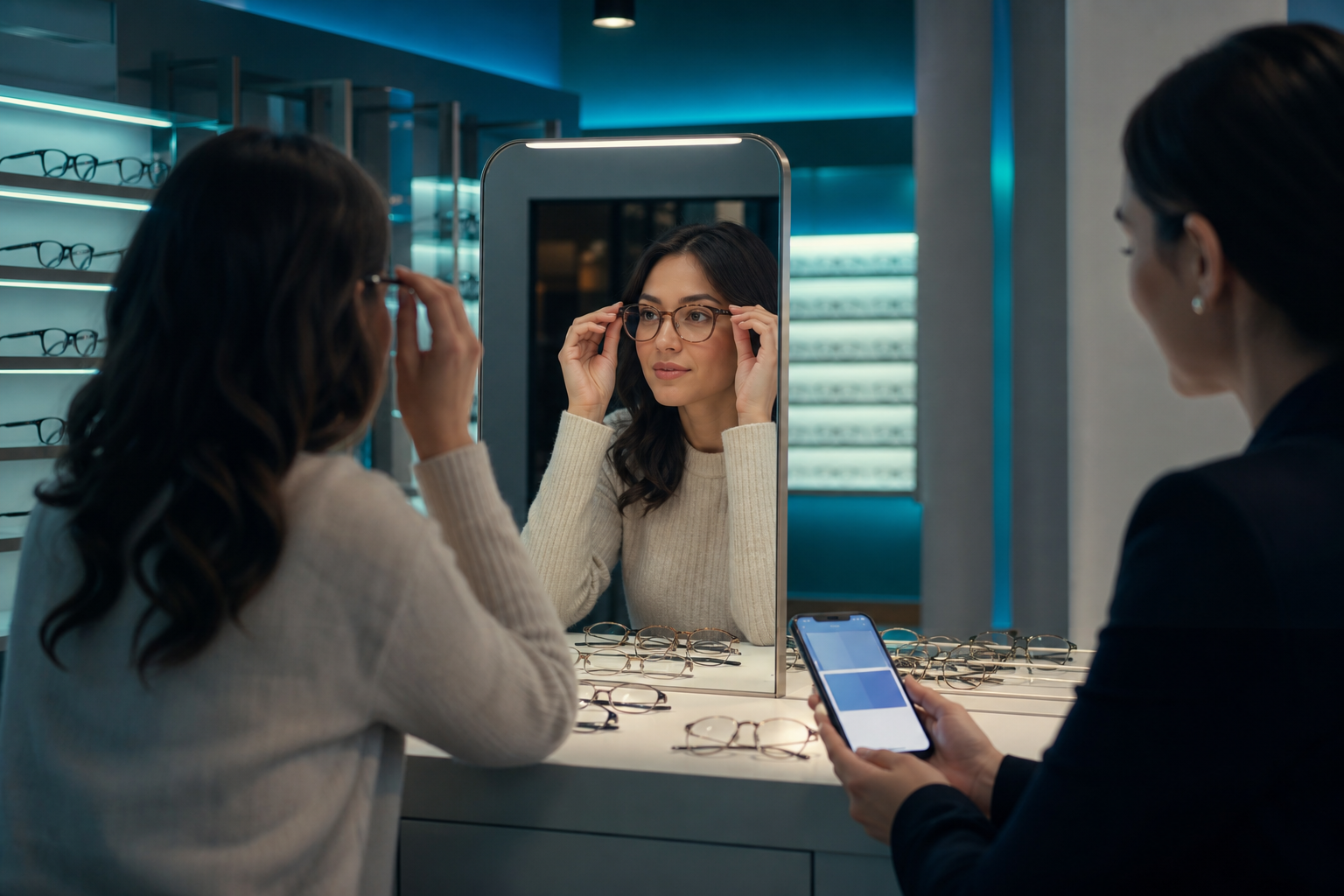
Situation: Prescription eyewear is not a pure impulse category. Customers worry about fit, power accuracy, frame style, returns and after-sales service. For an omnichannel brand like Lenskart, promotion had to do more than create awareness - it had to reduce perceived risk.
The move: Lenskart combined broad advertising with digital performance marketing, store-led experience, offers, app journeys, reminders and credibility-building communication around convenience and eye-care access. The primary driver was omnichannel assurance - customers could discover online but complete or validate the purchase through assisted store experiences. Supporting drivers included product variety, home or store trials, easy offers, CRM nudges and consistent visual identity.
Outcome or lesson: The promotion mix worked because it did not rely on one loud message. It matched the customer journey: advertising created familiarity, PR and store experience reduced risk, promotions encouraged trial, and digital nudges helped complete the purchase.
How AI Changes the Promotion Mix
AI is changing the promotion mix by making planning, personalisation and measurement faster - but it also increases the risk of generic creative and privacy mistakes.
Use Perplexity or NotebookLM to study a company’s recent campaigns. Load credible articles, annual-report marketing commentary and app screenshots, then ask: “Map this brand’s promotion mix across advertising, PR, sales promotion and direct digital. What seems to be the primary objective, and what metrics would prove success?”
Interview Relevance
“Choose any Indian consumer brand and explain its promotion mix. If you were the brand manager, how would you decide the role of advertising, PR, sales promotion and digital?”
A strong answer sounds like a mini media plan, not a list. Say: “For new-user trial, I would use advertising for reach, PR for credibility, introductory promotion for first purchase, and direct digital for retargeting and repeat purchase.”
Common Mistake
The mistake: candidates list advertising, PR, sales promotion and digital as if all brands should use all four equally. This costs marks because it ignores objective, funnel stage, category economics and measurement. One-line fix: always say what job each tool performs and what metric will prove it worked.
What to Revise Next
Now move from “which tool should we use?” to “how do we execute it well?” Revise Advertising Strategy & Writing a Winning Creative Brief first, then Media Planning & Buying Fundamentals to understand reach, frequency, media selection and budget allocation.