
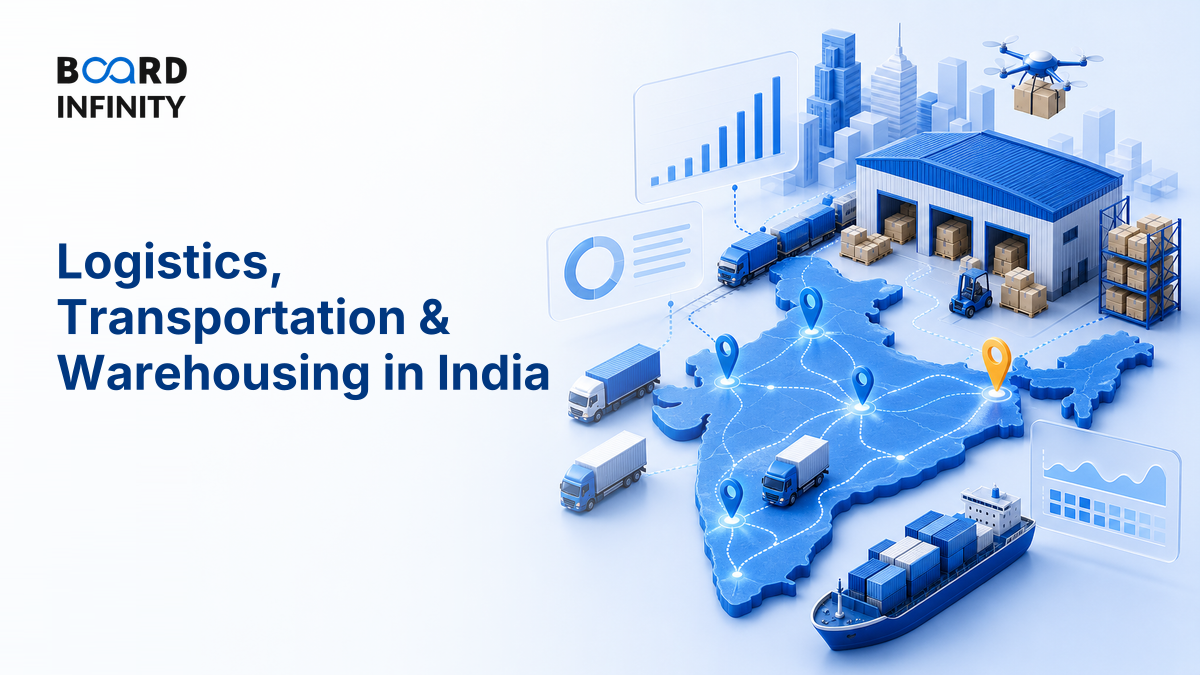
Logistics, Transportation & Warehousing in India is a structured track of 14 lessons that build a complete, interview-ready understanding of the topic. Work through them in order, then use the quiz and flashcards in each lesson to revise.
What this course covers
- What Logistics Covers and What It Costs in India - The logistics cost structure, and why India's ratio has been so debated.
- Transportation Modes Compared on Cost, Speed & Reliability - Road, rail, sea, air and pipeline, compared on the dimensions that decide.
- Freight Rates, Cost per Unit Moved & Load Optimisation - How freight is priced, and the arithmetic of filling a vehicle properly.
- Route Planning, Milk Runs & Fleet Utilisation - Designing routes and improving utilisation without hurting service windows.
- Multimodal, Rail Freight & Dedicated Corridors - When rail beats road in India, and what dedicated corridors changed.
- Ports, Shipping, Air Cargo & International Freight - Container shipping, air freight economics and port turnaround realities.
- Customs, Documentation & Cross-Border Trade Compliance - The documents, duties and clearance steps that hold up shipments.
- Warehouse Types, Design & Storage Systems - Sizing a warehouse, choosing racking and designing for the throughput required.
- Warehouse Operations: Receiving to Dispatch - Every process inside the four walls, with the productivity measure for each.
- Warehouse Automation, Robotics & Picking Technology - The automation options, their economics and when manual still wins.
- Third-Party and Fourth-Party Logistics Models - What to outsource, how contracts are structured and how performance is managed.
- Cold Chain and Temperature-Controlled Logistics - Cold chain design, monitoring and the wastage economics in Indian conditions.
- Using AI in Route Optimisation and Freight Procurement - Where AI improves routing and freight buying, and what it needs to work.
- Applied: Costing a Distribution Network for a Consumer Brand - A full network cost build with modal mix, warehousing and cost to serve.