
Using AI in Route Optimisation and Freight Procurement
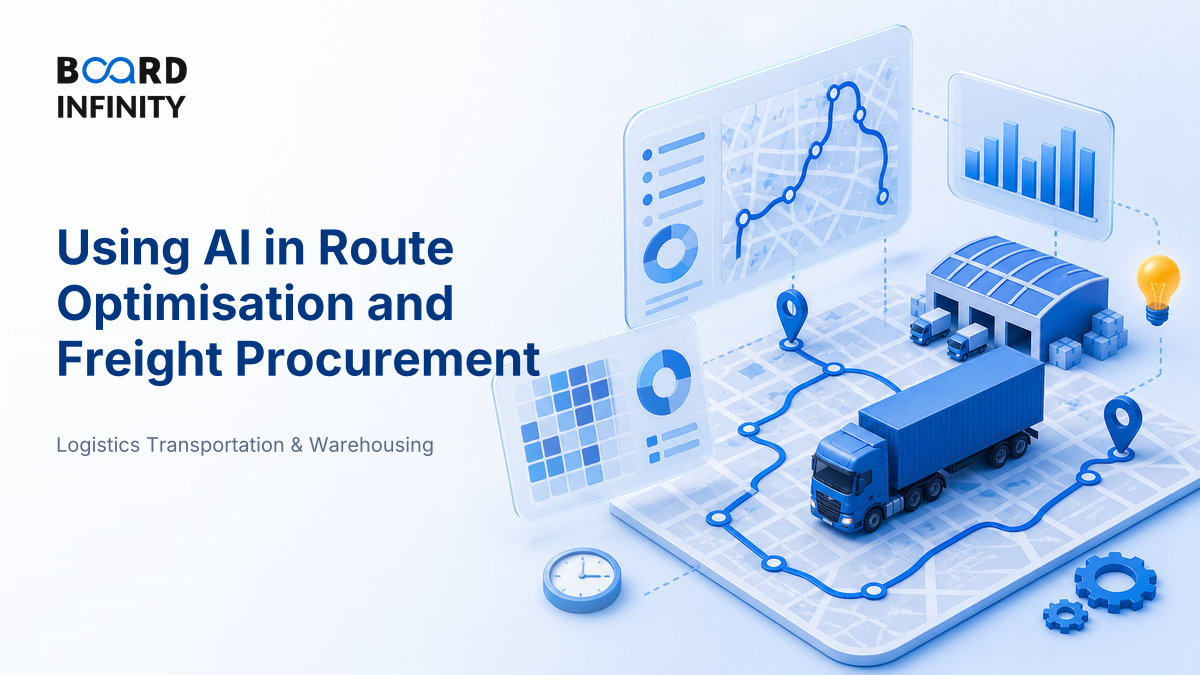
A plant dispatch team is staring at three problems at once: one truck is half-empty, another is stuck near a city toll gate, and a key retailer will penalise the company if the delivery misses its slot. The cheapest freight quote is suddenly not the cheapest decision, because the route, carrier reliability, loading plan and return load all interact.
- Route optimisation chooses the best sequence, vehicle and path for deliveries under real-world constraints.
- Freight procurement buys transport capacity through spot quotes, contracts, auctions or managed carrier panels.
- AI creates value when these two are connected: the system should buy capacity based on route economics, not just quoted price.
- The core inputs are orders, locations, service windows, vehicle capacity, carrier rates, historical delays, tolls, fuel, and loading constraints.
- The core outputs are lower landed freight cost, better on-time delivery, higher vehicle utilisation, fewer empty kilometres and better carrier compliance.
- The best interview answer balances algorithmic optimisation with execution reality: dock capacity, driver availability, disruption and supplier behaviour.
- The trap: treating AI as a magic route map instead of a decision system that needs clean data, business rules and change management.
The Big Picture
AI in freight does not start with an algorithm. It starts with a logistics decision stack: first you know the network, then the constraints, then the cost-to-serve, and only then can AI recommend routes, carriers and procurement moves.
Core Explanation: How AI Connects Routes and Freight Buying
Route optimisation is the process of selecting the best vehicle, sequence and path to serve delivery or pickup points while respecting cost and service constraints. Freight procurement is the process of sourcing, contracting and managing transport capacity from carriers or logistics partners.
In many companies, these are handled separately. The logistics team plans the route; procurement negotiates the freight rate. AI improves the decision because it can evaluate them together: “Which carrier, on which lane, with which load consolidation and route sequence, gives the best cost-service-risk outcome?”
The Five-Step Operating Model
Use this as your interview framework. It is simple enough to say under pressure and complete enough to sound practical.
Where AI Actually Helps
AI is useful when freight decisions are too dynamic for manual spreadsheets. It can forecast demand, predict delay risk, recommend carrier allocation, simulate procurement scenarios and re-optimise routes when conditions change.
This is where procurement knowledge matters. If you need the buying side first, revise what procurement owns and how it creates value, then connect it to freight lanes and carrier performance.
Route Optimisation vs Freight Procurement
Think of route optimisation as the “how should the truck move?” decision and freight procurement as the “who should move it and on what commercial terms?” decision. AI becomes powerful when both questions are solved together.
Key Metrics to Track
There is no universal “good” logistics number because lane length, product type, geography and service promise differ. In interviews, define the metric, show the formula, and say that a strong result is one that improves against the company’s baseline while meeting service commitments.
A Small Worked Example: Why Cheapest Freight Is Not Always Cheapest
Suppose a consumer goods company must move three orders from one warehouse tomorrow.
The AI logic is not “pick the cheapest carrier.” It is “minimise total cost subject to delivery windows, vehicle capacity, carrier reliability and operational feasibility.” That is the language interviewers like.
Definitions You Can Say Cleanly
- Route optimisation: Selecting the best feasible vehicle routes and stop sequences to minimise cost or time while meeting constraints.
- Freight procurement: Sourcing, contracting and managing transportation capacity to move goods at the right cost, service and risk level.
- Vehicle Routing Problem: A logistics optimisation problem of serving multiple locations with vehicles while minimising cost under constraints, as explained in Google OR-Tools vehicle routing documentation.
- Tender acceptance: The carrier’s decision to accept or reject a load offered under a contract or spot award.
Case Study - BlackBuck: Digital Freight Matching in Indian Trucking
BlackBuck shows how digital freight platforms can connect shipper demand, trucker supply, lane visibility and procurement decisions in a fragmented road-freight market.
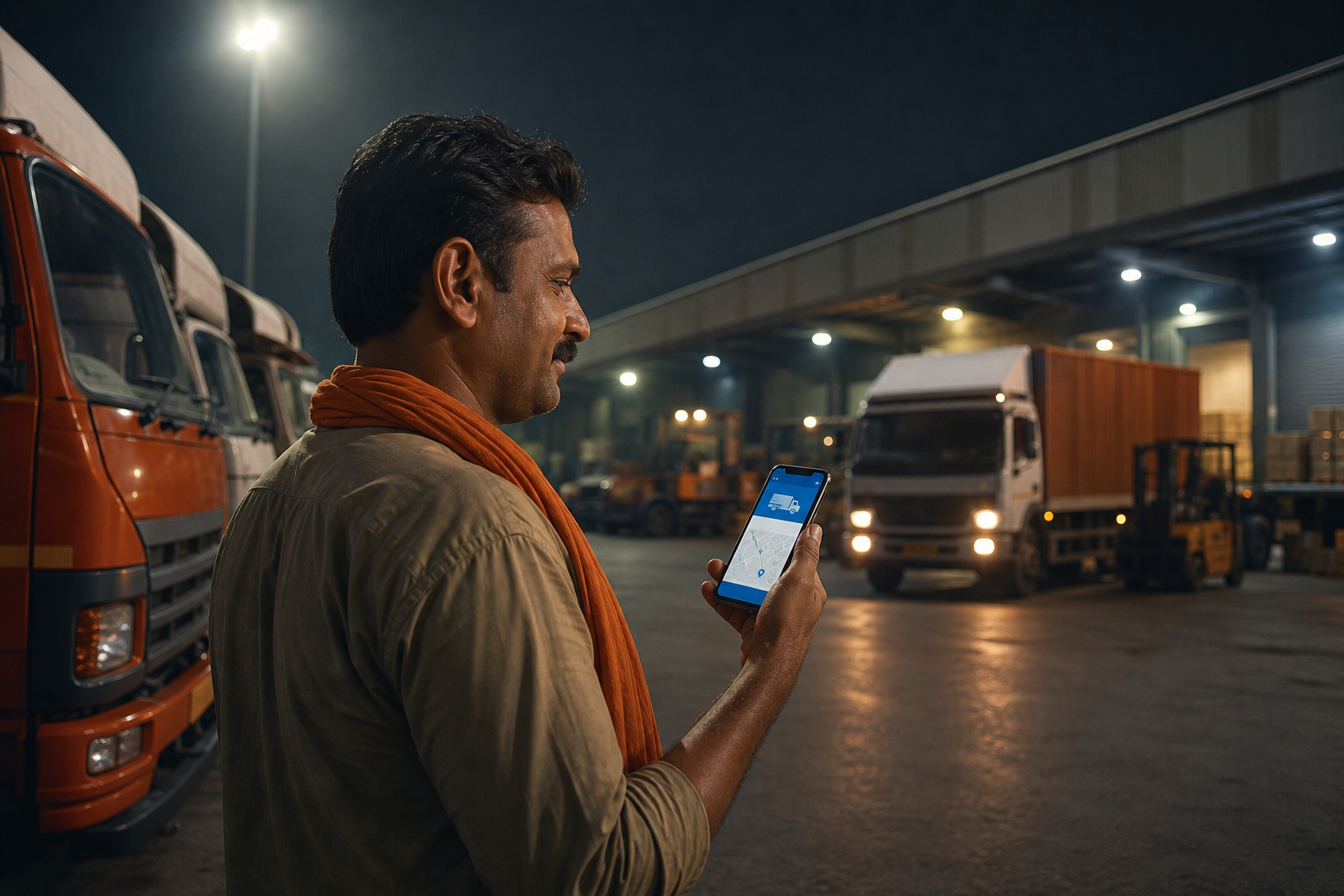
Indian road freight has traditionally involved fragmented truck ownership, broker relationships, uncertain capacity, manual follow-ups and variable service reliability. That makes freight procurement difficult: a shipper may know the quoted price, but not always the best available truck, the true service risk or the likelihood of acceptance.
BlackBuck is a named Indian example of a digital trucking platform that brings shippers and truckers onto a technology layer. The strategic move is not simply “put trucks on an app.” The primary driver is market matching: making freight demand and truck capacity more discoverable. Supporting drivers include digital load discovery, lane visibility, payment and service tools for truckers, and data trails that can improve future allocation decisions.
The lesson for AI route optimisation is clear: procurement quality improves when the system learns from execution. A carrier that looks cheap but frequently rejects loads or misses delivery slots should not be treated the same as a reliable carrier with a slightly higher rate. AI helps convert past freight behaviour into better future buying decisions.
How AI Changes Route Optimisation and Freight Procurement
1. From static route plans to real-time re-optimisation. Traditional route planning often freezes after dispatch. AI can re-plan when a vehicle is delayed, a customer changes a slot, a driver becomes unavailable or a high-priority order enters late.
2. From rate negotiation to total-cost procurement. Freight procurement is moving beyond “lowest quote wins.” AI can compare quotes with historical lane cost, acceptance probability, detention risk, service performance and backhaul possibility. For the buying process behind this, revise the sourcing process from requirement to contract.
3. From manual dashboards to predictive exceptions. AI can identify lanes, carriers, docks or customer clusters that are likely to fail before they fail. This lets the logistics team intervene early instead of explaining delays after the fact.
Student workflow: Load a company’s annual report, logistics notes and a sample lane table into NotebookLM. Ask it to generate likely interview questions on freight cost, route constraints, carrier risk and procurement levers. Then use ChatGPT to convert one question into a 90-second answer using the five-step operating model above. For the adjacent sourcing analytics layer, revise using AI in spend analysis, sourcing and contract review.
Interview Relevance
“A consumer goods company has rising freight cost and poor delivery reliability. How would you use AI for route optimisation and freight procurement?”
Use the phrase “optimise total landed freight outcome, not just line-haul rate”. It signals that you understand both operations and procurement.
Common Mistake
The biggest mistake is saying “AI will find the shortest route and reduce cost.” That sounds shallow because freight cost depends on vehicle fill, delivery windows, carrier acceptance, service penalties, detention, backhaul and reliability. The fix: frame AI as a cost-service-risk decision engine, not a map app!