
Transportation Modes Compared on Cost, Speed & Reliability
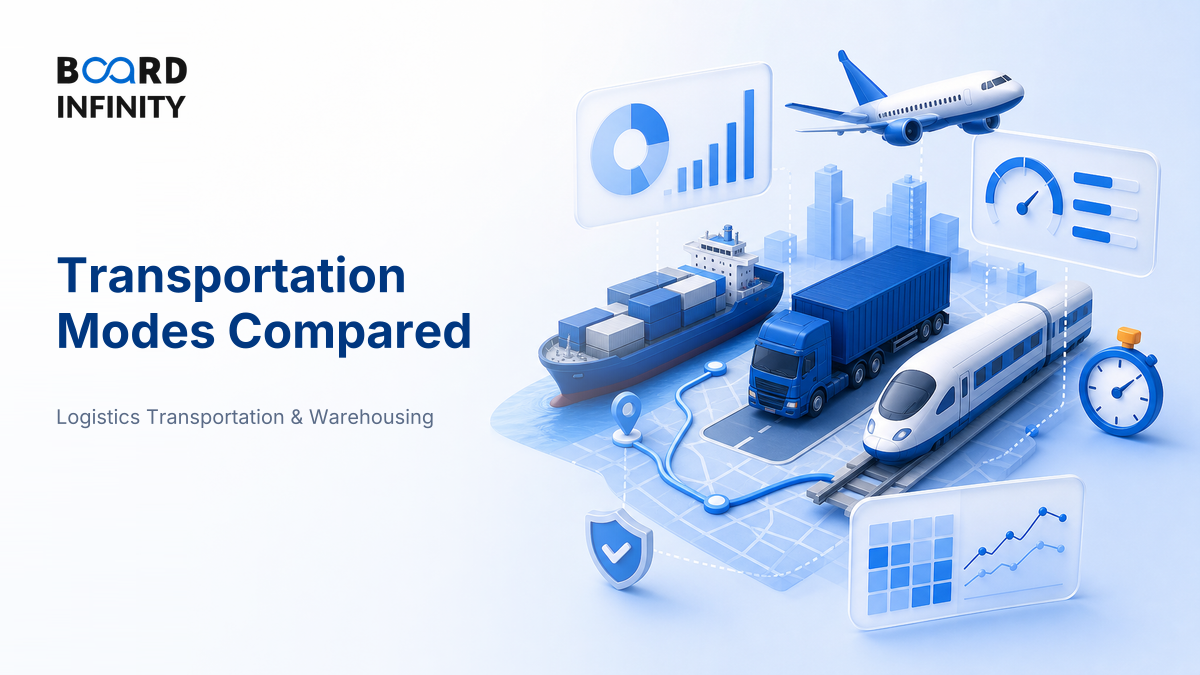
A shipment can leave a Pune factory today and reach Delhi tomorrow by air - or arrive days later by surface at a fraction of the cost. The wrong answer is not “air is fast” or “rail is cheap”; the right answer is knowing when the extra speed actually pays for itself.
- Transportation mode choice is the decision between road, rail, air, water, pipeline or multimodal movement based on cost, speed, reliability and freight fit.
- Road is flexible and strong for first-mile, last-mile and regional distribution, but cost and reliability vary with fuel, congestion and driver availability.
- Rail is economical for heavy, predictable, long-haul freight, but needs terminals, planning discipline and road connectivity at both ends.
- Air is fastest and useful for high-value, urgent or perishable goods, but expensive and constrained by cut-off times and airport handling.
- Water or ocean is usually the lowest-cost option for bulk and international freight, but slow and exposed to port, documentation and schedule variability.
- Reliability means not only on-time delivery, but also low variation in transit time - a slower mode can be more reliable than a faster one.
- The interview-winning answer compares modes on total landed cost, customer promise, inventory impact, risk and fallback options - not freight rate alone.
Big Picture
Transport mode selection is a trade-off decision. A supply chain manager is not choosing a vehicle; they are choosing the best promise the company can afford to make to the customer.
Core Explanation: How to Compare Transportation Modes
Start with the business question: what service promise must this shipment support? A spare part for a stopped factory, fresh seafood for a premium restaurant and cement for a construction site should not travel the same way.
The clean comparison is not “which mode is cheapest?” It is:
Mode-by-Mode Comparison
Use this table as your interview-ready mental map. Notice that each mode has a natural use case; forcing the wrong freight into the wrong mode creates hidden cost.
The Three Lenses: Cost, Speed and Reliability
1. Cost: Compare Total Landed Cost, Not Freight Rate
Freight rate is the quoted charge for transport. Total landed logistics cost includes freight, handling, packaging, insurance, duties where relevant, damage, inventory carrying cost and stock-out impact.
This is where many answers become shallow. If air freight avoids a production shutdown, it may be economically correct despite a high freight rate. If ocean freight forces the company to hold months of inventory, the “cheap” mode may create expensive working capital.
For procurement-heavy roles, connect mode choice to freight contract design, service-level clauses and incentives. That is a natural extension of contracting, incentives and service agreements.
2. Speed: Separate Line-Haul Time from Door-to-Door Time
Line-haul time is the movement time between major nodes, such as airport to airport or terminal to terminal. Door-to-door time includes pickup, consolidation, documentation, loading, unloading, terminal dwell and final delivery.
Air may win line-haul speed but lose time in cut-offs and handling if the shipment misses a flight. Rail may look slower, but for predictable long-haul bulk freight it can beat fragmented road movement on consistency and cost.
3. Reliability: Average Time Is Not Enough
Reliability is the probability that freight arrives within the promised time window with acceptable condition and documentation.
A lane with an average delivery time of two days but frequent five-day exceptions is risky. A lane with a steady three-day delivery may be better for planning production, store replenishment or customer promises.
Metrics to Track When Comparing Modes
In interviews, naming metrics makes your answer operational. Use these six measures to evaluate whether a mode is actually working.
Worked Example: Air or Road for an Urgent Shipment?
Suppose a distributor must move 500 kg of electronic components from Bengaluru to Mumbai.
The incremental air cost is ₹30,000. If missing the delivery causes lost contribution margin, penalty, production stoppage or customer churn greater than ₹30,000, air is rational. If not, road express is better. This is the difference between a logistics answer and a business answer.
Definitions
- Transportation mode: the physical method used to move freight from origin to destination, such as road, rail, air, water or pipeline.
- Intermodal transport: movement using multiple modes while the freight stays in the same loading unit, such as a container.
- Multimodal transport: movement using more than one mode under an integrated transport plan or contract.
- Reliability: the ability of a transport option to deliver within the promised time window, consistently and without damage.
- Total landed logistics cost: all costs required to move, protect, hold and deliver goods to the final usable point.
Case Study: Blue Dart and the Premium Transport Promise
Blue Dart shows how an Indian express logistics player uses air, surface movement and last-mile delivery together to sell reliability, not just transportation.
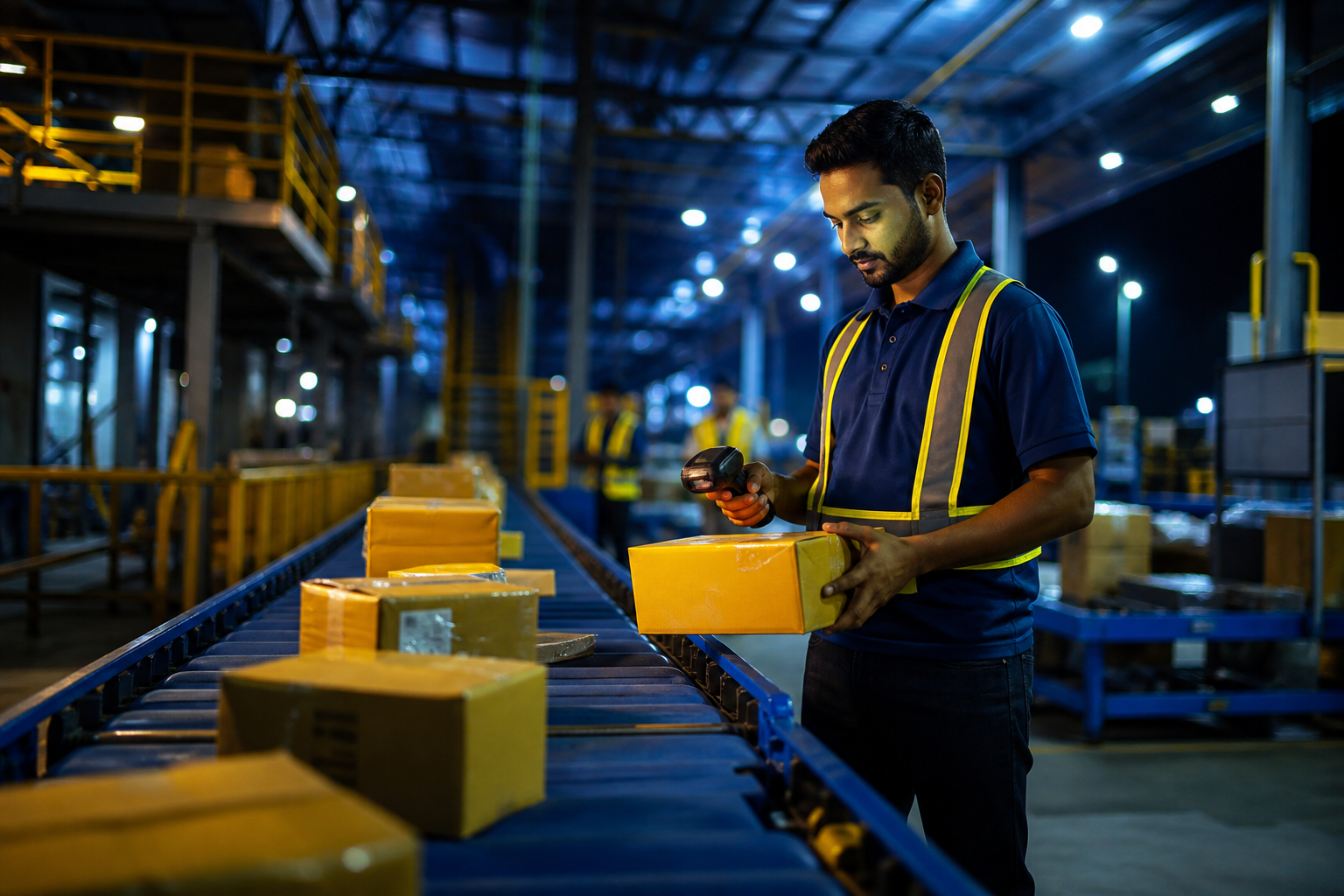
Consider the problem Blue Dart solves for customers: many shipments are not simply “goods in motion.” They are urgent documents, replacement parts, e-commerce orders, medical samples, electronics or business-critical parcels where the customer values predictability.
The strategic move is a portfolio of modes. Time-sensitive shipments can be routed through premium air and express networks. Less urgent or heavier shipments can move through surface networks. Final delivery still depends on local road execution, scanning discipline and exception management.
The primary driver is service reliability as a product. The supporting drivers are network coverage, shipment visibility, hub operations, route planning, trained handling and clear service promises. That is why a premium logistics brand cannot be explained by “fast delivery” alone.
The interview lesson: a transport strategy is strongest when it gives customers differentiated service levels - urgent freight gets speed, regular freight gets cost efficiency, and the network protects reliability across both.
How AI Changes Transportation Modes Compared on Cost, Speed and Reliability
AI does not remove the trade-off. It makes the trade-off more visible, dynamic and data-backed.
A practical student workflow: load a company annual report, logistics notes and a lane-level case into ChatGPT or NotebookLM, then ask: “For each shipment type, recommend the transport mode, state the cost-speed-reliability trade-off, and list the KPIs to monitor.” If your case involves replenishment, connect mode reliability to inventory buffers using AI for inventory optimisation and replenishment.
Interview Relevance
“A company must move goods from Mumbai to Kolkata. How would you choose between road, rail and air?”
If the case gives no numbers, do not freeze. Say: “I would first segment shipments by urgency and value density, then choose premium modes only where the avoided business loss exceeds the incremental freight cost.”
Common Mistake
The mistake: choosing the mode with the lowest freight rate and calling it optimal. Why it costs candidates: it ignores working capital, stock-outs, damage, customer promise and variability. One-line fix: compare modes on total landed cost, speed, reliability and risk - then justify the trade-off.