
Multimodal, Rail Freight & Dedicated Corridors
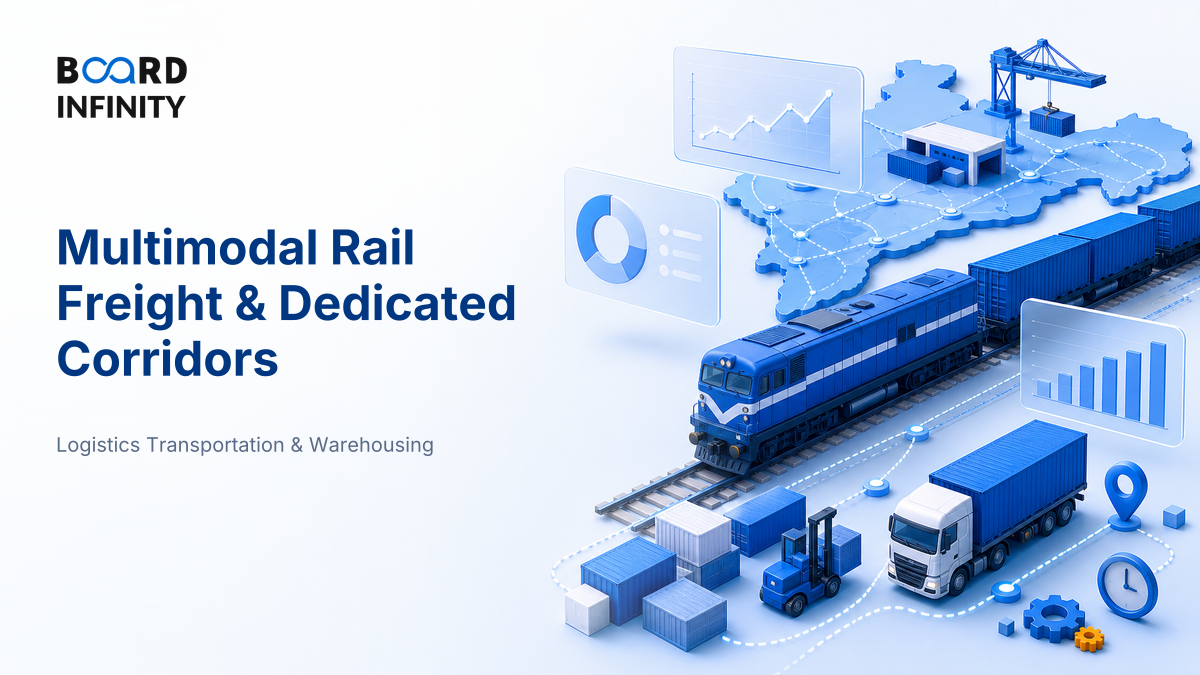
At a dry port outside Delhi, a sealed container leaves a factory by truck, gets lifted onto a train, races overnight on a freight-heavy rail route, and finally returns to road for the last few kilometres. To the customer, it is one shipment. Underneath, it is a choreography of modes, terminals, contracts and timing.
- Multimodal freight means moving one shipment using two or more transport modes under a coordinated plan, often with one logistics provider.
- Rail freight wins on long-haul, heavy, predictable, containerised or bulk cargo - but loses when first-mile and last-mile handling is weak.
- Dedicated Freight Corridors improve freight reliability by separating freight-heavy movement from passenger-heavy rail congestion.
- The core decision is not “road versus rail”; it is which leg belongs to which mode.
- Use five filters: cargo fit, distance, volume regularity, terminal access and service reliability.
- Track OTIF, cost per tonne-km, terminal dwell time, utilisation and damage rate - not just freight cost.
- The biggest interview trap is praising rail as “cheaper” without explaining drayage, handling, inventory and service trade-offs.
Big Picture: Multimodal Is a Network Design Choice
Multimodal freight is the art of giving each transport mode the leg it performs best. Road gives reach, rail gives efficient line-haul, ports connect global routes, and inland terminals stitch the system together.
A dedicated rail corridor strengthens the middle of this chain. It does not remove trucks; it makes the rail portion more reliable, predictable and scalable so trucks can focus on pickup and delivery instead of long-haul movement.
Core Explanation: How Multimodal Rail Freight Actually Works
Multimodal freight is the movement of cargo using two or more modes - typically road, rail, sea or inland waterways - as one planned logistics solution.
Rail freight is strongest when cargo has weight, volume, regularity and distance. Coal, steel, cement, automobiles, foodgrain, containers and bulk commodities are natural rail candidates. Road remains powerful where delivery points are fragmented, lead times are short, or terminal access is poor.
Dedicated Freight Corridors are rail corridors designed primarily for freight movement. In India, the Dedicated Freight Corridor Corporation of India Limited, a public sector company under the Ministry of Railways, is responsible for implementing dedicated freight corridors (DFCCIL).
The Five Filters for Choosing Rail in a Multimodal Plan
A good answer should not say “rail is cheaper.” It should show when rail becomes economically and operationally logical.
This is why supply chain managers connect mode choice with inventory decisions. If rail is cheaper but less frequent, the buyer may need higher buffer stock; revise setting inventory policy for a multi-product business when you want to link logistics service levels to stock decisions.
Road, Rail and Multimodal: What Changes Operationally
Each model solves a different problem. Road optimises reach. Rail optimises dense long-haul movement. Multimodal optimises the total chain by combining both.
Dedicated Freight Corridors: Why They Matter
Railways that carry both passenger and freight traffic face a classic capacity conflict. Passenger trains need speed and punctuality. Freight trains need heavy loads, longer consists and predictable paths. Dedicated corridors reduce this conflict by giving freight a more suitable operating environment.
The strategic value is bigger than faster trains. A corridor can reshape factory location, warehousing, inland container depots, export planning and port connectivity. This is also why India links freight corridors with broader multimodal infrastructure planning under programmes such as PM Gati Shakti.
Indian automobile manufacturers increasingly use rail to move finished vehicles where routes, rake availability and destination terminals permit. The strategic logic is not only lower line-haul cost; the supporting drivers are lower road exposure, batch movement, reduced highway congestion risk and better planning for high-volume corridors. The “so what” is simple: rail works best when the product, lane and terminal ecosystem are designed together.
Key Metrics to Track in Multimodal Rail Freight
In interviews, use metrics that show both cost and service. Freight cost alone can mislead because a low transport rate may hide delays, damages, inventory buffers or poor terminal performance.
If you are evaluating a logistics provider, do not stop at price. Connect these KPIs to contract terms, penalties and gain-sharing. That is where contracting, incentives and service agreements becomes the natural next topic.
Definitions You Can Say in One Breath
- Multimodal freight: Movement of one shipment using two or more transport modes as one coordinated logistics solution.
- Intermodal freight: Movement using multiple modes where the same loading unit, such as a container, is transferred between modes.
- Rail freight: Cargo movement by rail, typically suited to dense, heavy, regular or long-distance flows.
- Dedicated freight corridor: A rail route designed primarily for freight movement to improve capacity, reliability and throughput.
- Drayage: Short-distance road movement that connects a shipper or consignee to a rail terminal, port or depot.
Case Study: Gateway Distriparks and the Rail-Linked ICD Model
Gateway Distriparks shows how an Indian logistics company can make multimodal freight usable by combining inland terminals, rail movement and road connectivity.
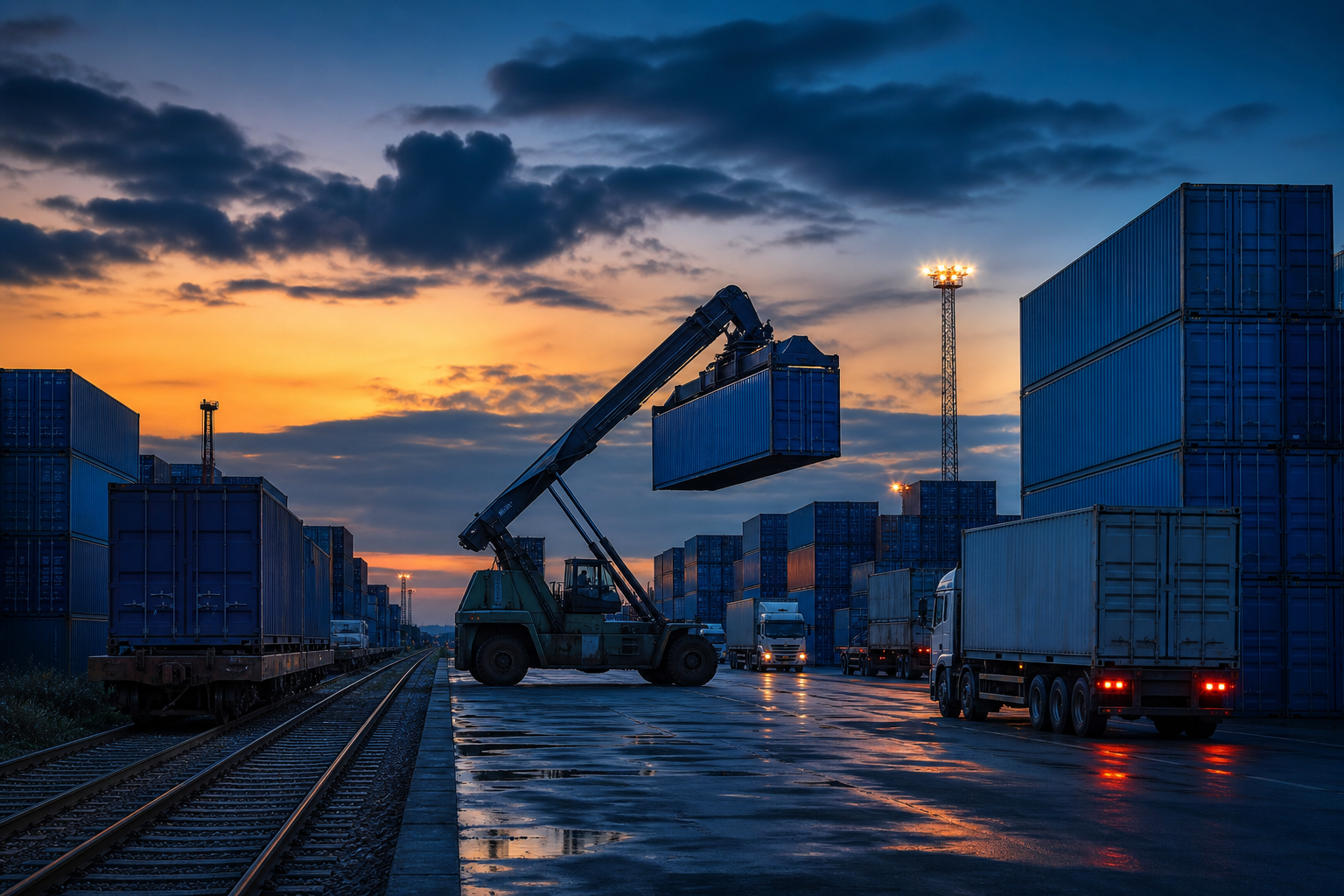
Gateway Distriparks operates in the inland container depot and rail-linked logistics space in India, positioning itself around container movement, terminal handling and rail connectivity (Gateway Distriparks). Its business is useful for this topic because it is not just a transporter; it sits at the junction where exporters, importers, shipping lines, rail services and road carriers interact.
Situation: Exporters and importers located away from seaports need reliable container movement. Pure road movement offers flexibility, but long-haul road can be costly, congested and difficult to scale. Pure rail is efficient, but customers still need pickup, documentation, terminal handling and final delivery.
The move: Gateway Distriparks built its proposition around inland container depots, rail-linked container movement and road connectivity. The primary driver is terminal control - without a reliable node, multimodal coordination collapses. Supporting drivers include container handling capability, scheduled rail movement, customer relationships with trade users, and the ability to coordinate first-mile and last-mile road movement.
Lesson: The winner in multimodal freight is not always the company that owns the train or the truck. It is often the company that controls the handoff, gives customers visibility, and reduces friction between modes.
How AI Changes Multimodal, Rail Freight & Dedicated Corridors
AI matters here because multimodal freight is a prediction and coordination problem: Which cargo should move by rail? Which terminal will choke? Which route will miss the delivery promise?
The caution: AI cannot fix a bad physical network. If terminal capacity, documentation, labour coordination or last-mile access is weak, the model will only predict the delay more accurately.
Use NotebookLM or ChatGPT like a logistics analyst: upload a company annual report, a corridor map or a logistics provider profile, then ask, “Identify which freight lanes are rail-fit, what KPIs should be tracked, and what risks remain in first-mile and last-mile execution.”
Interview Relevance
“A manufacturing company currently ships finished goods by road from North India to West India. How would you evaluate whether it should shift part of the movement to rail using a multimodal model?”
Use this line to sound mature: “I would not compare road rate versus rail rate; I would compare delivered service cost across the full lane.”
Common Mistake
The costly mistake is saying “rail is cheaper and greener, so shift to rail” without testing terminals, drayage, reliability and inventory impact. The one-line fix: evaluate total landed cost and service reliability across the complete multimodal chain, not the line-haul rate alone.