
Warehouse Operations: Receiving to Dispatch
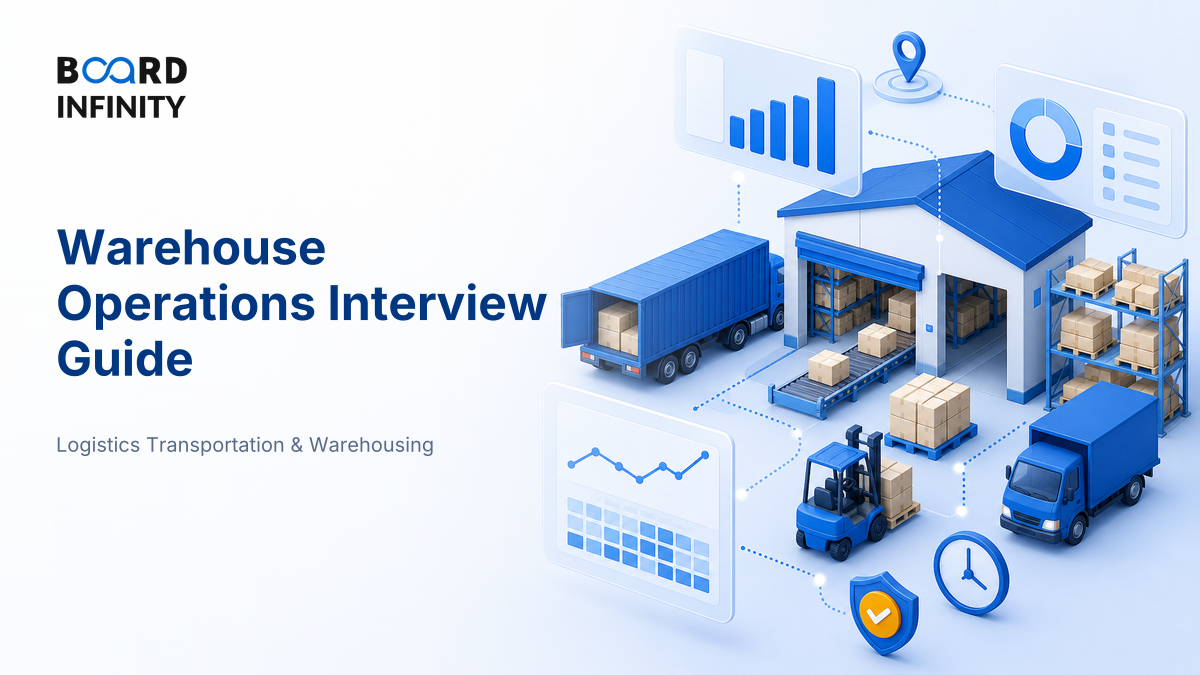
A warehouse can lose a sale without ever running out of stock. One carton may be inside the building, but if it is not received, located, picked, packed and handed over on time, the customer still experiences a stockout.
That is the core of warehouse operations: not just storing inventory, but converting inventory into reliable, accurate, dispatch-ready orders.
- Warehouse operations are the physical and information flows that move goods from receiving to dispatch with accuracy, speed and control.
- The core flow is receive - inspect - put away - store/replenish - pick - pack - dispatch.
- A warehouse fails when physical movement and system records do not match.
- The three operating goals are accuracy, velocity and cost control; improving one can hurt another if poorly designed.
- Key KPIs include dock-to-stock time, inventory accuracy, picking accuracy, order cycle time, space utilisation and cost per order.
- Good warehouse design starts with SKU behaviour: fast movers need easy access; slow movers can sit deeper inside.
- The interview-winning answer is never a list of activities; it links process flow, bottlenecks, KPIs, technology and people discipline.
Big Picture: A Warehouse Is a Conversion Engine
Think of a warehouse as a conversion engine. It converts supplier deliveries into available inventory, and then converts available inventory into customer-ready shipments. Every activity either makes inventory more visible, more accessible or more dispatchable.
Core Explanation: From Receiving to Dispatch
The easiest way to understand warehouse operations is to follow one unit of inventory as it travels through the building. A good warehouse has two flows moving together: the physical flow of goods and the information flow in the warehouse management system or ERP.
1. Receiving: The Gatekeeper of Accuracy
Receiving is the process of accepting inbound goods, verifying them against purchase orders or advance shipment notices, checking condition and recording them in the system.
If receiving is weak, the rest of the warehouse runs on bad data. Typical checks include quantity, SKU code, batch number, expiry date where relevant, damage, packaging condition and supplier documentation.
2. Inspection and Quality Check: Stop Bad Inventory Early
Inspection separates acceptable goods from damaged, excess, short, expired or non-compliant goods. In food, pharma, electronics and automotive, this step is not optional because wrong acceptance can create safety, warranty or regulatory risk.
The operating rule is simple: do not let questionable inventory disappear into general storage. Keep it in a quarantine or hold area until disposition is decided.
3. Putaway: Speed Depends on Location Discipline
Putaway means moving received goods to the right storage location and confirming that location in the system. This is where many warehouses quietly lose productivity: items are available on paper but impossible to find quickly.
Putaway logic should match SKU behaviour. Fast-moving products go near picking zones; bulky items go where handling is safe; high-value products go into controlled areas; expiry-sensitive products follow FEFO - first expiry, first out.
4. Storage and Replenishment: Keep Stock Accessible, Not Just Stored
Storage is not passive. A warehouse must maintain inventory accuracy, cycle count locations, replenish forward pick faces and prevent congestion. This connects closely with setting inventory policy for a multi-product business, because the stocking decision upstream determines how much pressure the warehouse faces downstream.
5. Picking: The Highest Labour-Impact Activity
Picking is the retrieval of items for a customer order, store replenishment order or production requirement. It often consumes the largest share of manual warehouse labour, so small design improvements create large gains.
Common picking methods include piece picking, batch picking, zone picking and wave picking. The right choice depends on order profile: few large orders behave differently from many small e-commerce orders.
6. Packing, Staging and Dispatch: Where Promise Becomes Delivery
Packing protects the product, consolidates the order, adds documentation and prepares it for carrier handover. Staging places packed orders in the right dispatch lane by route, carrier, customer, store or cut-off time.
Dispatch is complete only when shipment is physically handed over and digitally confirmed. If dispatch confirmation is delayed, customer service, inventory and finance all see the wrong truth.
The Warehouse Design Logic: Match Handling to SKU Behaviour
Not every SKU deserves the same storage location or picking method. A warehouse that treats all SKUs equally usually wastes travel time on the items ordered most frequently.
Use a simple 2x2: movement speed on one axis and handling complexity on the other. This helps you decide which items need prime locations, special controls or low-touch storage.
Key Warehouse KPIs: What to Measure and What Good Looks Like
In interviews, metrics separate a vague answer from an operational answer. Do not say “improve efficiency” without naming the measure. Use these KPIs as your warehouse dashboard, but always adapt targets to industry, product type and service promise.
A good answer also explains trade-offs. For example, pushing space utilisation too high can slow picking and increase safety risk. Cutting labour cost too aggressively can damage dispatch accuracy. Warehouse excellence is balanced, not extreme.
Definitions You Should Be Able to Say Clearly
- Warehouse operations: Activities that receive, store, control, pick, pack and dispatch goods accurately and efficiently.
- Putaway: Moving received goods to assigned storage locations and confirming the location in the system.
- Slotting: Assigning SKUs to warehouse locations based on demand, size, handling needs and picking efficiency.
- Cycle counting: Regularly counting selected inventory locations to maintain accuracy without shutting the warehouse.
- WMS: Software that directs and records warehouse activities such as receiving, storage, picking, packing and dispatch.
- Dock-to-stock time: The elapsed time from inbound arrival to inventory becoming available for use or sale.
Case Study: Lenskart and High-Accuracy Omnichannel Fulfilment
Lenskart shows why warehouse operations must control both product movement and product identity when thousands of small, similar-looking SKUs move across online and store channels.
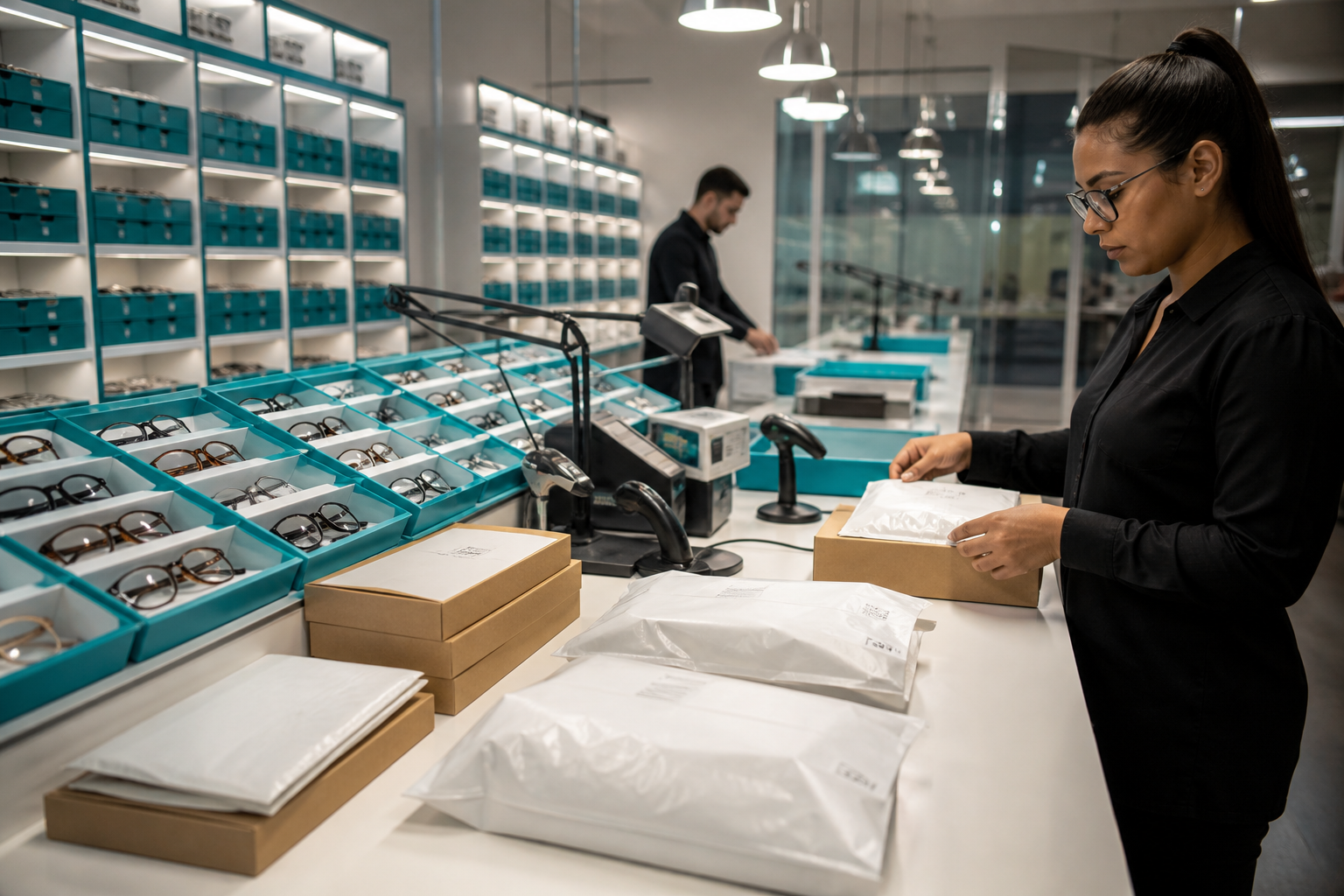
Lenskart’s operating challenge is not simply to store eyewear. Frames, lenses, accessories and finished orders can look visually similar but differ by SKU, prescription, colour, size and customer requirement. A wrong pick does not just create a return; it breaks trust in a highly personal product.
The strategic move is to treat fulfilment as a controlled flow: identify inventory precisely at receiving, store SKUs in disciplined locations, pick against digital instructions, perform quality checks, then dispatch to customers or stores. The primary driver is SKU-level accuracy. Supporting drivers include barcode-based identification, controlled storage, omnichannel inventory visibility, quality checks before dispatch and disciplined returns handling.
The lesson: in high-SKU, customer-specific categories, warehouse success is driven chiefly by inventory identity and process discipline, supported by technology, trained labour and tight exception handling. A shallow answer says “Lenskart needs fast delivery.” A strong answer says “Lenskart needs accurate fulfilment because speed without correctness creates returns and trust loss.”
How AI Changes Warehouse Operations: Receiving to Dispatch
AI is not replacing the warehouse flow; it is making the flow more predictive, exception-driven and dynamically controlled.
A practical student workflow: load a company annual report, a warehouse process note and your KPI table into NotebookLM, then ask: “Identify likely warehouse bottlenecks, the KPI affected and one AI-enabled improvement.” For replenishment-heavy roles, revise using AI for inventory optimisation and replenishment because warehouse availability depends on upstream inventory decisions.
Interview Relevance
“Walk me through warehouse operations from receiving to dispatch. If dispatches are getting delayed, how would you diagnose and improve the process?”
If the question involves labour productivity, connect warehouse work to line balancing and workstation design. Picking, packing and dispatch are workstation flows, not just manpower problems.
Common Mistake
The mistake: candidates describe warehouse operations as “receiving, storing and dispatching” and stop there. Why it costs them: it sounds like a textbook list, not an operations diagnosis. One-line fix: always connect each stage to one KPI, one possible failure mode and one control mechanism.