
Ports, Shipping, Air Cargo & International Freight
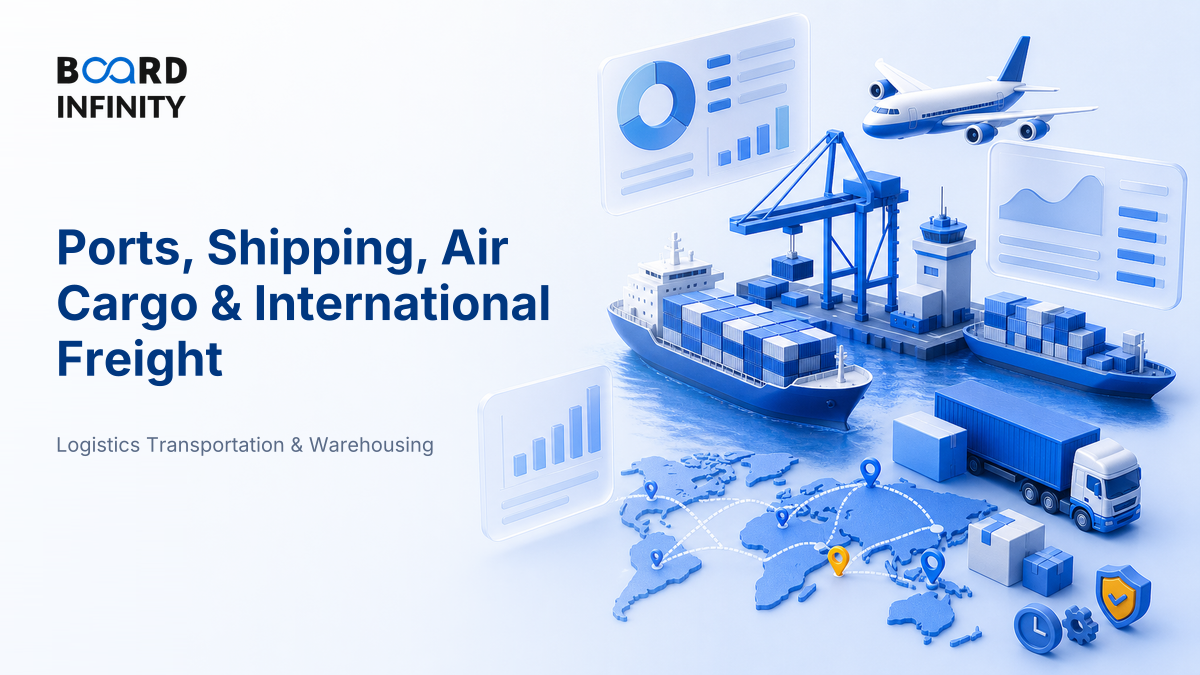
The biggest misconception in international freight is that it is simply “choosing the cheapest mode.” In reality, the expensive part is often the invisible handoff - a missed vessel cutoff, a wrong Incoterm, cargo stuck at port, or air freight booked to rescue a delayed ocean shipment.
- International freight is the cross-border movement of goods using ocean, air, road, rail or multimodal networks.
- Ocean shipping is best for large, heavy, lower-urgency cargo; air cargo is best for high-value, urgent, perishable or stockout-risk cargo.
- Ports are not just parking lots for ships - they are transfer systems where berth, yard, gate, customs and inland transport must synchronize.
- Freight forwarders coordinate carriers, documentation, consolidation, customs brokers and tracking; they reduce complexity, not physical distance.
- Incoterms decide commercial responsibility - who pays, who bears risk, and where delivery happens.
- Great freight decisions balance cost, speed, reliability and risk - not cost alone.
- The interview-winning answer is: map cargo need, choose mode, define Incoterm, select partners, measure reliability and manage disruption.
Big Picture: International Freight Is a Chain of Hand-offs
Think of global freight as a relay race. The shipper may only see the invoice, but the cargo passes through origin pickup, export clearance, terminal handling, main carriage, import clearance and final delivery. Every handoff creates cost, delay and risk.
Ocean freight dominates global trade by physical volume - UNCTAD states that maritime transport carries over 80% of the volume of international trade (UNCTAD Review of Maritime Transport 2023). Air cargo carries far less by weight, but is critical for high-value, time-sensitive supply chains such as electronics, pharma, fashion launches and urgent spares; IATA notes that air cargo transports over one-third of world trade by value (IATA Cargo).
Core Explanation: The Four Decisions in Freight
A good freight manager is not asking “ship or fly?” first. They are answering four linked questions: what is moving, how urgent is it, who owns risk, and what failure would cost.
1. Choose the right mode
The mode decision depends on cargo value density, urgency, weight, perishability, destination connectivity and disruption risk.
2. Decide the commercial responsibility
The physical mode is only half the answer. The commercial question is: where does the seller’s responsibility end and the buyer’s begin? That is where Incoterms matter. The International Chamber of Commerce publishes Incoterms rules to clarify delivery obligations, costs and risk transfer in international sales (ICC Incoterms rules).
EXW gives the buyer more responsibility from the seller premises. FOB is common for ocean export where the seller delivers goods on board. CIF includes cost, insurance and freight to destination port. DAP/DDP push more delivery responsibility toward the seller, with DDP including import duties and taxes.
3. Select the operating model
A shipper can book directly with carriers, use a freight forwarder, appoint a customs broker, or outsource wider control tower operations. The more fragmented the lane, the more valuable coordination becomes. This is where strong contracting, incentives and service agreements matter - freight contracts must specify service level, liability, surcharges, escalation and exception handling, not only base rate.
4. Manage exceptions before they become crises
International freight fails in predictable ways: vessel rollovers, port congestion, missing documents, customs queries, aircraft capacity shortages, damage, demurrage, detention and last-mile delivery failures. The best teams define exception rules upfront - when to expedite, when to split shipments, when to switch ports, and when to escalate to a control tower.
Ports, Shipping and Air Cargo: What Each Part Actually Does
Ports
A port is a logistics operating system. Ships berth, cranes discharge or load containers, yards stack cargo, customs and port health authorities clear shipments, and trucks or rail evacuate cargo inland. Port performance depends on berth productivity, yard planning, gate appointment discipline, documentation accuracy and hinterland connectivity.
Shipping lines
Shipping lines provide ocean capacity on scheduled routes. They manage vessels, containers, slot availability, transshipment networks, surcharges and service reliability. A shipper does not only buy a “sea leg”; it buys access to a sailing schedule, equipment availability and a port-pair network.
Air cargo
Air cargo moves through belly capacity on passenger aircraft, dedicated freighters, express integrators and airport cargo terminals. It is used when speed, shelf life, service recovery or working-capital impact justifies the premium.
Key Metrics: How Freight Performance Is Measured
In interviews, metrics show that you can run freight like a business system. Do not say “track cost and delivery.” Name the exact measures.
Worked Example: Should We Ship by Air or Ocean?
Suppose an importer has 1,000 kg of electronic components. Ocean freight will cost ₹80,000 and take 24 days. Air freight will cost ₹4,20,000 and take 5 days. The product margin impact of stockout is estimated at ₹25,000 per day.
Decision: Air looks expensive on the freight invoice, but cheaper on total decision cost. This is the key interview insight: compare landed and delay-adjusted cost, not freight rate alone.
Definitions You Can Say in One Breath
- International freight: Cross-border movement of goods through ocean, air, road, rail or multimodal transport networks.
- Port: A node where cargo transfers between ships, terminals, customs systems and inland transport.
- Freight forwarder: An intermediary that arranges transport, consolidation, documentation, customs coordination and tracking for shippers.
- TEU: A standard container capacity unit equal to one twenty-foot equivalent unit.
- Demurrage: Charges for keeping a container inside the terminal beyond allowed free time.
- Detention: Charges for holding a carrier’s container outside the terminal beyond allowed free time.
- Chargeable weight: The billing weight used in air freight, based on actual weight or volumetric weight, whichever is higher.
Case Study: Allcargo Logistics and the Power of LCL Consolidation
Allcargo Logistics built a cross-border logistics model around international supply chain services, especially less-than-container-load consolidation, showing how freight value often comes from coordination rather than asset ownership.
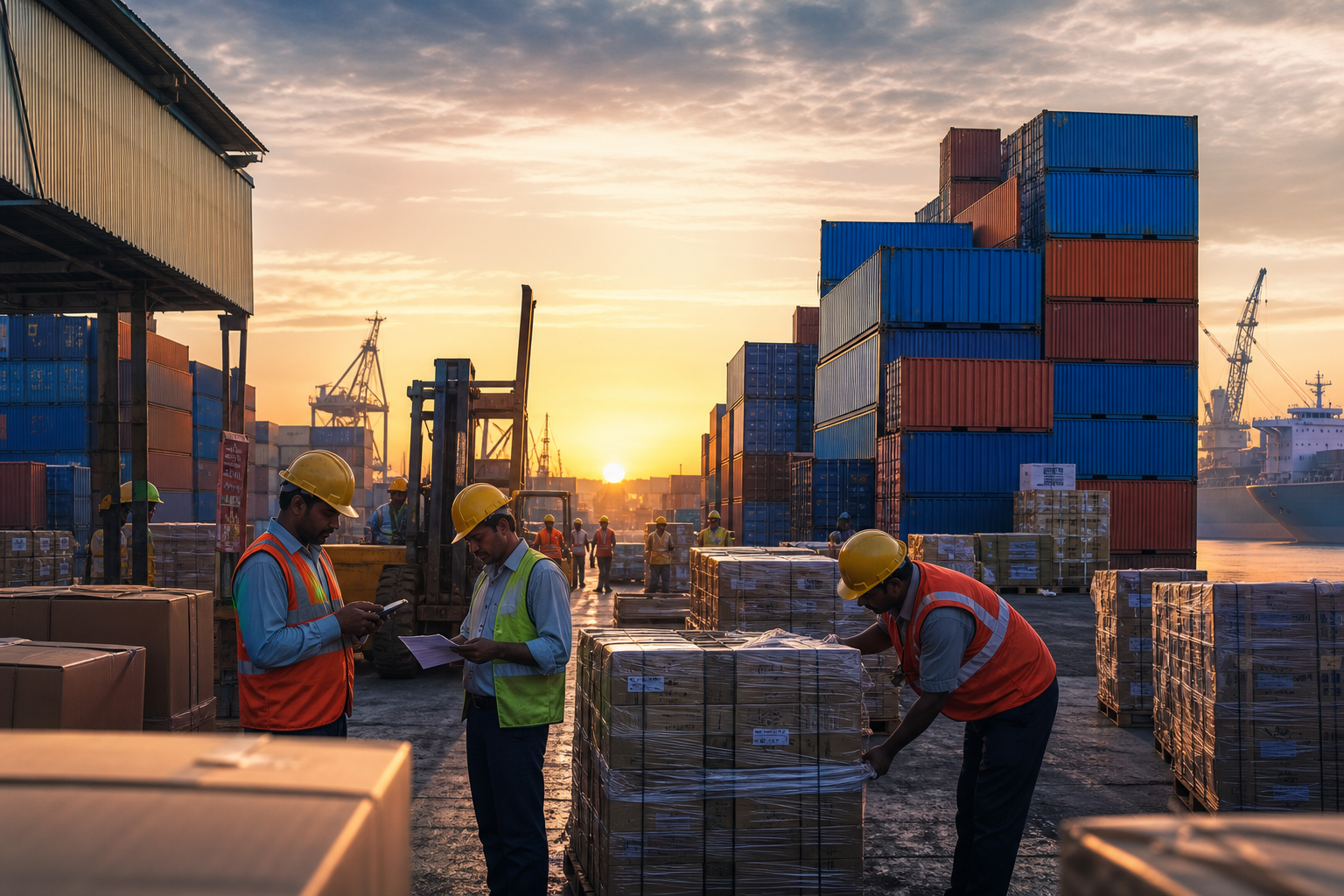
Many Indian exporters, especially SMEs, do not always have enough cargo to fill a full container. If each exporter tried to ship independently, freight would be expensive, handling would be inefficient, and documentation errors would multiply.
Allcargo Logistics, through its international supply chain and LCL-focused network, addresses this problem by consolidating smaller shipments, coordinating origin and destination handling, and connecting freight with container freight stations, inland movement and documentation support. The company describes its business across international supply chain, express distribution, CFS/ICD and contract logistics on its corporate site (Allcargo Logistics).
The primary driver is network-based consolidation - combining many small shipments into efficient freight flows. Supporting drivers include documentation coordination, CFS/ICD connectivity, destination partnerships and shipment visibility. The lesson: in international freight, competitive advantage often comes from orchestrating fragmented flows better than competitors, not simply owning more vehicles or containers.
How AI Changes Ports, Shipping, Air Cargo & International Freight
1. Predictive ETAs and exception management: AI models combine vessel schedules, port congestion signals, weather, aircraft capacity and historical lane performance to predict delays earlier. The value is not a prettier dashboard - it is earlier decisions on expediting, rerouting or splitting shipments.
2. Dynamic freight buying and lane intelligence: Freight teams can use AI to compare contract rates, spot quotes, surcharges, carrier reliability and seasonal capacity. This strengthens carrier selection and scorecards; the same discipline connects naturally with supplier selection, scorecards and evaluation.
3. Document automation and compliance checks: AI can extract data from invoices, packing lists, bills of lading and airway bills, then flag mismatches before customs filing. Humans still own compliance judgment, but AI reduces manual checking load.
Use NotebookLM: upload this lesson, a logistics company annual report, and one port or airline cargo page. Ask: “Create five interview questions on international freight strategy, with model answers using cost, speed, risk and reliability.” Then practice answering aloud in two minutes.
Interview Relevance
“A company imports components from Vietnam to India. Demand is volatile, air freight is costly, and ocean freight is slow. How would you design the international freight strategy?”
Use the phrase “total landed cost plus service risk”. It signals that you understand freight beyond rate negotiation.
Common Mistake
The single biggest mistake is choosing the “cheapest” freight mode without quantifying delay, inventory and disruption cost. It costs candidates because it sounds operationally naive. The one-line fix: compare modes on total landed cost, transit reliability, inventory impact and failure risk - not freight rate alone.