
What Logistics Covers and What It Costs in India
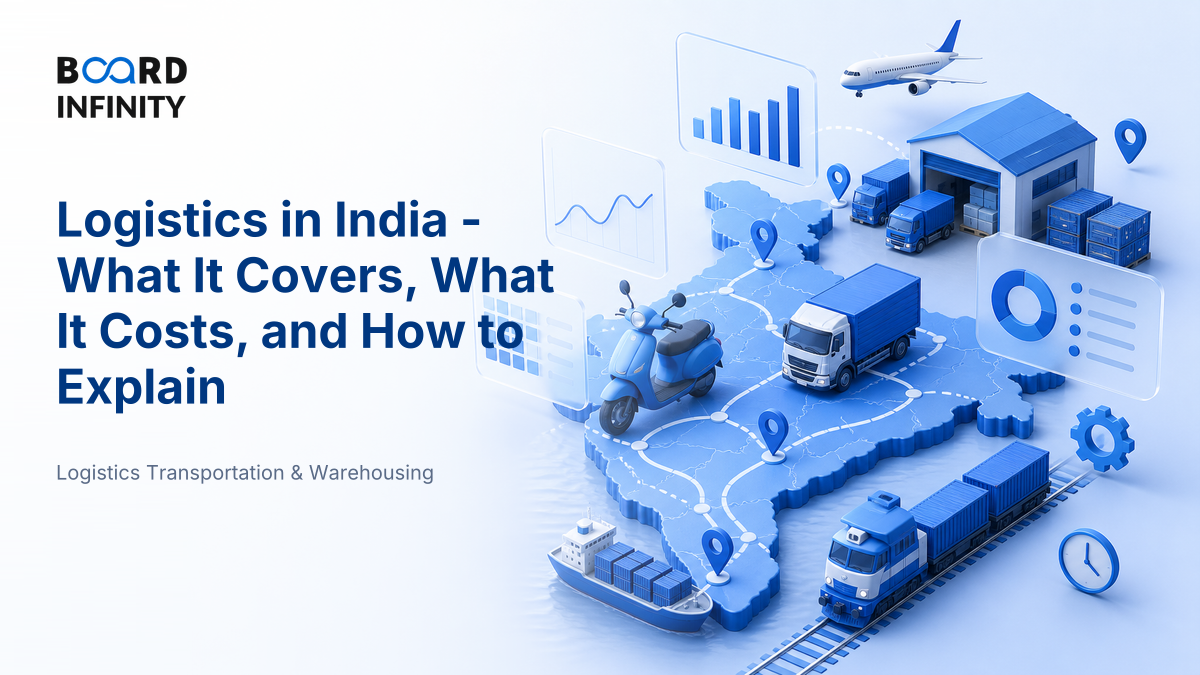
A shipment leaves a Pune plant at 6 p.m. for a Bengaluru distributor, but one missing e-way bill, a half-filled truck, or a badly chosen lane can turn a profitable order into a margin leak. That is the real tension in logistics: the customer sees delivery, but the business feels every kilometre, delay, touch and return as cost.
- Logistics covers movement, storage, handling, information flow and returns - not just transportation.
- Transportation is usually the most visible cost, but warehousing, inventory carrying, packaging damage, detention and returns often decide profitability.
- Total logistics cost should be seen as cost-to-serve: what it costs to deliver one order, case, kg or customer promise.
- India-specific complexity comes from fragmented trucking, lane imbalance, GST documentation, city restrictions, return logistics and multimodal gaps.
- The best interview answer moves from scope to cost buckets to metrics to improvement levers - never from “trucks are expensive” alone.
- Good logistics design trades off cost and service: lowest freight is useless if OTIF, damage and working capital worsen.
Big Picture - Logistics Is the Flow Between Promise and Payment
Think of logistics as the physical and information bridge between a company’s demand promise and its cash collection. If sales creates the order and manufacturing creates the product, logistics makes the promise real - at the right place, right time, right condition and right cost.
What Logistics Actually Covers
In interviews, students often answer logistics as “transportation.” That is too narrow. Transportation is only one activity inside logistics. A complete answer covers five operating blocks.
In India, the documentation layer is especially important. For many goods movements, firms must manage GST-linked e-way bill compliance through the official e-way bill system, which makes logistics both an operations and compliance function.
Also notice the connection with procurement. Freight cost often gets locked before the truck moves - in supplier location, Incoterms-like responsibility, minimum order quantities and service-level clauses. If that upstream connection is weak, revise what procurement owns and how it creates value.
The Logistics Cost Stack in India
The visible bill is usually freight. The real cost is a layered stack. The higher layers are harder to see, but they often explain why two companies paying similar freight rates can have very different margins.
1. Freight and transportation cost
This includes primary transport from plant to warehouse, secondary transport to distributors or retailers, and last-mile delivery to the final customer. In India, cost depends heavily on lane, load factor, vehicle type, fuel movement, tolls, waiting time, seasonality and whether the truck gets a return load.
2. Warehousing and handling cost
This includes rent, manpower, equipment, utilities, warehouse management systems, security, packaging, put-away, picking, packing and dispatch. A warehouse is not just a storage location - it is a productivity system.
3. Inventory carrying cost
Inventory sitting in the network consumes capital. Carrying cost includes cost of capital, insurance, shrinkage, damage, obsolescence and storage. A company can reduce freight by shipping in bulk, but if that creates slow-moving stock, the saving may be fake.
4. Compliance, documentation and administration cost
This includes freight audit, billing disputes, proof of delivery, e-way bills, permits where applicable, contract management and vendor coordination. These costs become visible when shipments are delayed, invoices are disputed or working capital gets stuck.
5. Service failure cost
This is the hidden layer: penalties, lost sales, emergency shipments, customer escalations, stockouts, returns and damaged goods. For consumer businesses, service failure can cost more than freight because it hits both revenue and brand trust.
Total Logistics Cost - The Interview-Level Formula
A strong candidate does not say “reduce freight.” A strong candidate says: “optimise total logistics cost while protecting service.” Use this formula:
Total logistics cost = transportation + warehousing + handling + inventory carrying + packaging + documentation + loss/damage + returns + service failure cost.
The managerial question is not “Which line item is lowest?” It is “Which network design gives the lowest cost-to-serve at the required service level?”
Key Metrics to Track Logistics Cost and Performance
Metrics must connect cost with service. If you track only cost, teams under-serve customers. If you track only service, teams over-spend. Use these measures together.
Worked Example - Cost per Unit Moved
Suppose an FMCG distributor ships 10,000 cases from a warehouse to retailers in one month.
Cost per case = ₹3,40,000 ÷ 10,000 = ₹34 per case.
Now assume better load planning reduces freight by ₹20,000, but damage rises by ₹30,000 because trucks are poorly stacked. New total cost becomes ₹3,50,000. The freight saving looked good, but total logistics cost worsened. That is the exact trap interviewers test.
Definitions You Should Be Able to Say Cleanly
- Logistics: Movement, storage and control of goods, information and returns from origin to consumption.
- Logistics management: The CSCMP glossary frames it as planning, implementing and controlling forward and reverse flow and storage to meet customer requirements.
- Transportation: The physical movement of goods between two points by road, rail, air, sea or pipeline.
- Cost-to-serve: Total cost incurred to fulfil a customer, channel, SKU or order at the promised service level.
- Reverse logistics: The process of moving goods back for return, repair, refurbishment, recycling or disposal.
Case Study - Mahindra Logistics and the Shift from Trucks to Integrated Logistics
Mahindra Logistics shows why modern logistics players compete on integrated cost-to-serve, not merely on arranging transport.
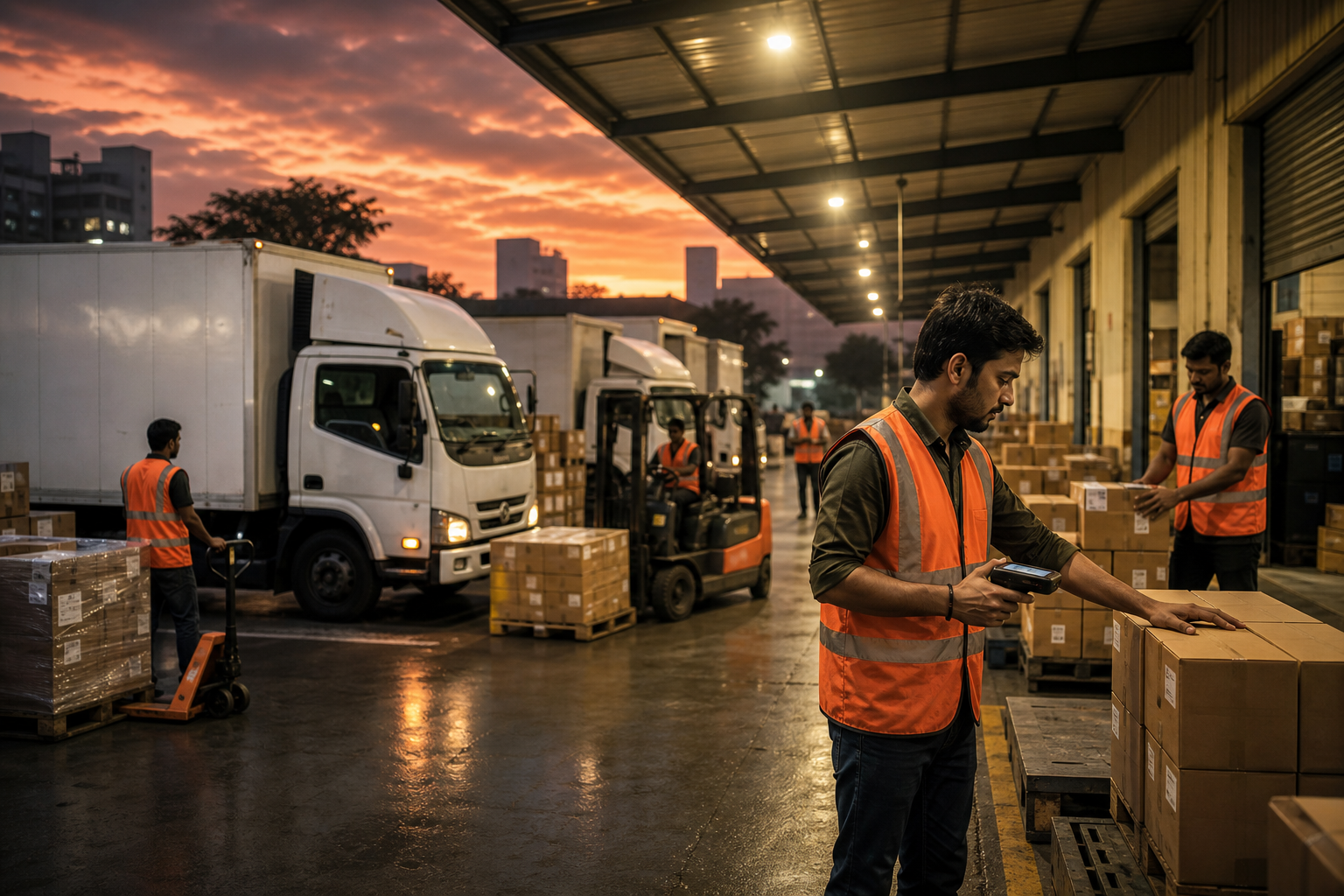
Situation: Many Indian companies historically managed logistics through fragmented transporters, separate warehouse vendors and manual shipment tracking. This worked when service expectations were moderate, but it became inefficient as automotive, e-commerce, consumer and manufacturing customers demanded faster deliveries, visibility and lower working capital.
The move: Mahindra Logistics positioned itself as an integrated third-party logistics provider, combining transportation, warehousing, in-factory logistics, last-mile and supply chain solutions. Its public investor communications describe a focus on integrated supply chain solutions, mobility and enterprise logistics rather than only truck brokerage (Mahindra Logistics investor relations).
Why it matters: The primary driver is integration - one operating partner can see the full flow from plant or warehouse to customer. Supporting drivers include technology-enabled visibility, sector-specific process capability, warehouse operations, transport planning and contract-based service levels. This is stronger than a one-factor explanation like “they reduce transport cost.” The real value is lower total cost-to-serve with better control.
Lesson: In India, logistics advantage increasingly comes from orchestrating many moving parts - assets, partners, warehouses, data, compliance and customer commitments - into one reliable system.
How AI Changes Logistics Costing in India
AI does not remove trucks, warehouses or documentation. It improves the decisions around them. In 2026, the most useful AI applications in logistics are concrete and operational.
The caution: AI is only as good as master data. Wrong SKU dimensions, inaccurate addresses, poor proof-of-delivery discipline and inconsistent transporter updates will make even advanced models unreliable. For the inventory side of this problem, revise using AI for inventory optimisation and replenishment.
Use NotebookLM or ChatGPT like this: upload a company annual report, pick its logistics-heavy business segment, and ask, “Map its logistics cost drivers into transportation, warehousing, inventory, returns and service failure. What interview questions can be asked?” Then convert the output into a 60-second answer.
Interview Relevance
“What does logistics cover in India, and if you were asked to reduce logistics cost for a company, where would you look first?”
If the interviewer asks for “cost reduction,” always add one sentence on service protection: “I would check that cost reduction does not hurt OTIF, damage rate or customer returns.” That makes your answer managerial, not clerical.
Common Mistake
The mistake: Treating logistics cost as only freight cost. Why it hurts: It ignores warehousing, inventory, damage, returns and service failure - the exact costs that often decide profitability. One-line fix: Always answer through total cost-to-serve, then show which cost bucket you would attack first and what service metric you would protect.