
Cold Chain and Temperature-Controlled Logistics
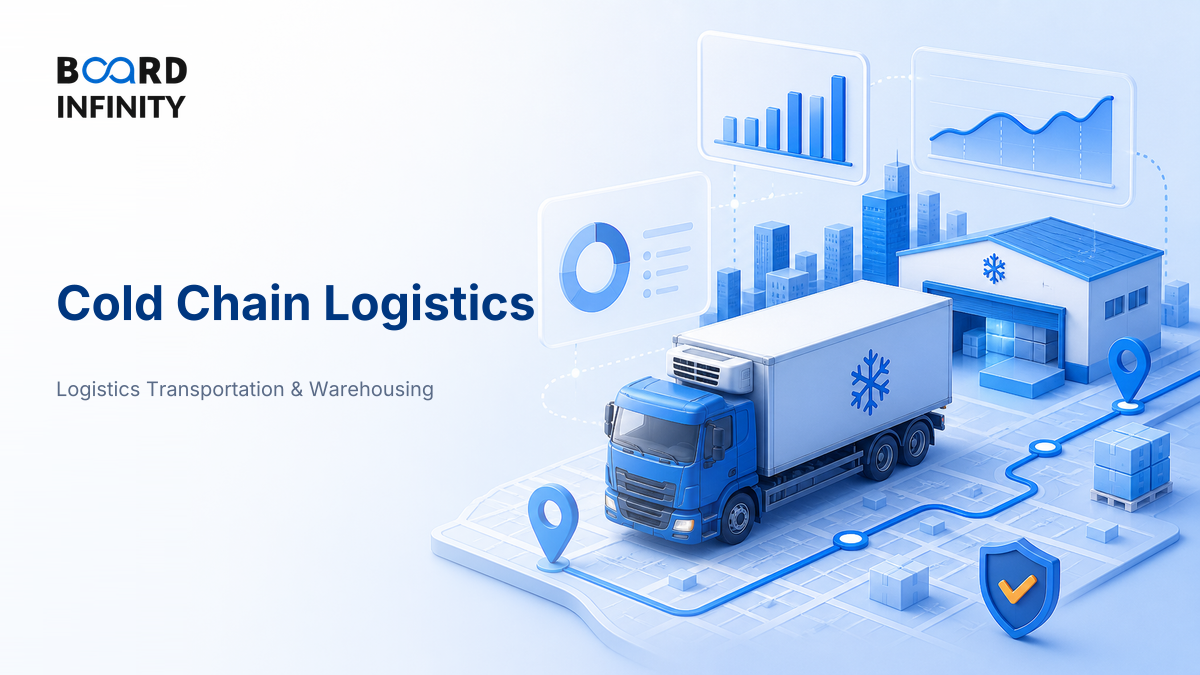
The biggest misconception about cold chain is that it begins when a refrigerated truck arrives. In reality, most failures happen in the boring gaps - a pallet waiting on a warm dock, a door left open, a sensor not read, a return kept outside validation limits.
- Cold chain means maintaining a product within its required temperature band from origin to final use.
- The real risk is not the truck alone - it is every handoff: loading bay, warehouse, airport, store backroom, delivery doorstep.
- Design starts with the product: frozen, chilled, controlled ambient, or cryogenic goods need different packaging, assets and monitoring.
- A strong cold chain balances four variables: temperature integrity, speed, cost and traceability.
- Key KPIs include excursion rate, time out of temperature, OTIF-in-temperature, dwell time, reefer utilization and sensor-data completeness.
- For interviews, explain cold chain as a validated system, not a fleet of refrigerated vehicles.
- The common mistake: saying “use reefers” without discussing SOPs, packaging, IoT monitoring, exception response and accountability.
Big Picture: Cold Chain Is a Control System, Not a Vehicle Type
Temperature-controlled logistics is the movement and storage of temperature-sensitive goods - food, dairy, meat, vaccines, biologics, flowers or specialty chemicals - within defined temperature limits. The operating challenge is simple to say and hard to execute: keep the product safe across multiple parties, locations and delays.
Core Explanation: The Five Moving Parts of a Cold Chain
A cold chain succeeds only when five elements work together. Break any one, and the product may look normal but become unsafe, ineffective or unsellable.
1. Product Temperature Requirement
Start with the product’s required temperature range, stability data and shelf-life sensitivity. A frozen food item, a fresh paneer pack, a vaccine and a biologic drug do not belong in the same design conversation.
The product decides the system. This is why cold chain planning sits close to inventory optimisation and replenishment: demand variability directly affects how long goods wait, where they wait and whether stock expires before sale.
2. Packaging and Thermal Protection
Packaging is not decoration. It is a temperature buffer. Depending on the lane, a shipper may use insulated boxes, gel packs, phase-change material, dry ice, reefer containers or active temperature-controlled units.
Passive packaging protects for a validated duration without powered cooling. Active packaging uses powered temperature control. The choice depends on lane duration, ambient temperature, shipment value and risk tolerance.
3. Controlled Storage and Transport
Cold rooms, reefer trucks, insulated vans, air cargo units and store-level freezers must be matched to the product. The mistake is assuming that a refrigerated vehicle solves the entire problem. It does not solve warm loading docks, poor pallet airflow or unplanned waiting.
4. SOPs at Every Handoff
A handoff is any point where responsibility changes: supplier to transporter, transporter to warehouse, warehouse to distributor, distributor to store or delivery partner to customer. Standard operating procedures, or SOPs, define what must happen at each handoff - pre-cooling, loading sequence, door-open limit, scan, temperature check, seal check and escalation.
5. Monitoring, Traceability and Exception Response
Monitoring turns invisible risk into visible data. Temperature loggers, IoT sensors, GPS, warehouse management systems and transport management systems together answer three questions: where is the product, what temperature did it experience and who is accountable?
If temperature goes outside the allowed band, that is a temperature excursion. The shipment may need quarantine, quality review, return, destruction or controlled release. In regulated sectors, a corrective and preventive action, or CAPA, should address the root cause rather than merely replacing the shipment.
Cost Trade-Off: Why “Colder” Is Not Always Better
Cold chain design is an optimization problem. Lower temperature, faster delivery and tighter controls reduce risk, but they increase asset cost, energy use, packaging cost and complexity. The best answer is not “maximum cooling”; it is “validated temperature control at the lowest total landed cost.”
Key Cold Chain KPIs to Track
Interviewers like cold chain because it tests whether you can connect operations with measurable performance. Use these metrics, and always mention that targets vary by product, regulatory requirement and service-level agreement.
Worked Example: Checking a Passive Cold Chain Lane
Assume a chilled product must stay within its approved band during a city-to-city shipment. The packaging has been validated for 24 hours under the expected ambient condition.
The logic is what matters: cold chain planning should convert uncertainty into a time-temperature budget.
Definitions You Can Say in One Breath
- Cold chain: a temperature-controlled supply chain that maintains product quality from origin to point of use, consistent with WHO vaccine supply-chain guidance.
- Temperature-controlled logistics: planned storage and movement that keep goods inside a specified temperature range throughout the journey.
- Temperature excursion: any recorded period outside the validated temperature limits for the product or shipment lane.
- Validation: documented evidence that packaging, equipment or a process can consistently maintain required temperature conditions.
- FEFO: first-expiry-first-out inventory rotation so products with the earliest expiry are dispatched first.
Case Study: Zomato Hyperpure and Restaurant Supply Cold Chain
Zomato Hyperpure shows why cold chain in food service is not just transportation - it is a trust system for restaurants that need consistent, safe ingredients.
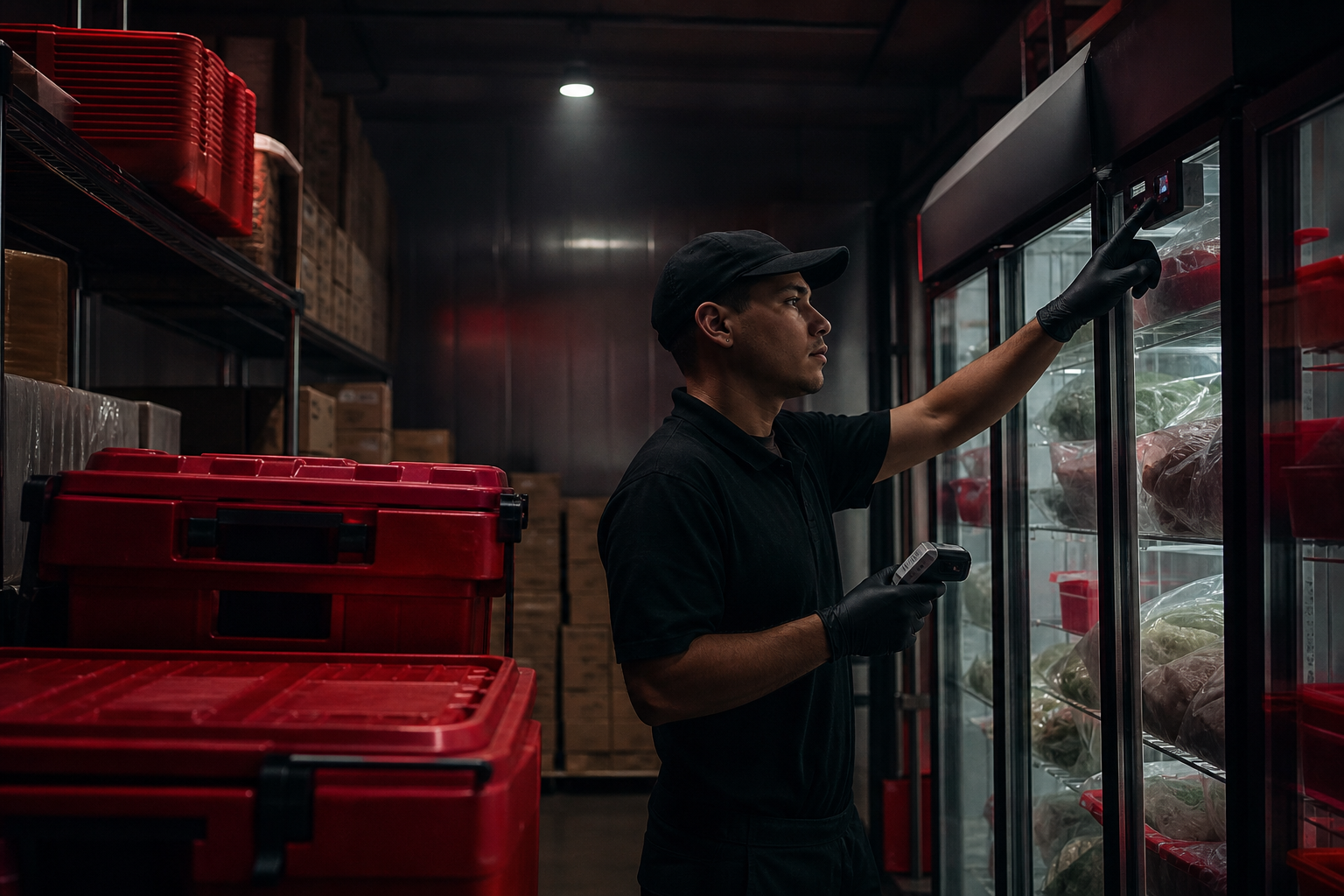
Situation: Restaurants face a practical supply problem: fresh ingredients need consistency, safety and timely availability, but demand fluctuates daily. A restaurant cannot afford unsafe meat, spoiled dairy, limp produce or uncertain delivery windows.
The move: Hyperpure positions itself as a B2B supply platform for restaurants. The cold-chain lesson is that the value proposition is not simply “we deliver ingredients.” The stronger proposition is “we manage sourcing, storage, quality checks, delivery discipline and traceability so the restaurant can trust the input.”
Primary driver: The main driver is supply reliability for restaurants - getting the right product in acceptable condition at the required time. The supporting drivers are demand aggregation, controlled storage, route planning, packaging discipline, digital ordering and quality visibility.
Outcome or lesson: The case proves the core idea: cold chain creates value when it converts perishable inventory into a dependable service promise. In an interview, do not reduce such a model to “refrigerated vans.” Talk about product integrity, network design, handoff control, monitoring and exception management.
How AI Changes Cold Chain and Temperature-Controlled Logistics
AI is changing cold chain in practical, operational ways - not by replacing refrigeration, but by making risk visible earlier and decisions faster.
Student workflow: Use ChatGPT or NotebookLM to practise like a supply-chain analyst. Load a company annual report, a cold-chain SLA template and your notes, then ask: “Identify the top five temperature-controlled logistics risks, the KPIs to monitor them and three interview questions I may be asked.” For sourcing and 3PL discussions, connect this with contracting, incentives and service agreements, because cold-chain performance must be written into the SLA.
Interview Relevance
“A dairy brand is expanding from one metro to five cities. How would you design its cold chain and what metrics would you track?”
Use the phrase “time-temperature budget”. It signals that you understand cold chain as an engineered system with limits, not as a generic logistics problem.
Common Mistake
Mistake: Treating cold chain as “hire refrigerated trucks.” This costs candidates because it ignores the failure points that actually damage product integrity - packaging, pre-cooling, dock dwell, unloading, sensor gaps, SOPs and exception response. Fix: answer in the sequence: product requirement → network design → controlled assets → handoff SOPs → monitoring → CAPA.