
Menu

Course Lessons
What is Full Stack Development?
Role of Social Media in Supply Chain Management
All About Resume and Its Importance
The Ultimate Basic Resume Format & Structure Guide
Resume Keywords: Optimize Your Resume and Get Interview Call
50 Power Words For Your Resume
Why Are Keywords Important in a Resume?
4 Tips for Using Keywords in a Resume
This is why you should be a career coach!
Types of Power Words for Resume Writing
Secrets Of A Good Resume, Which Will Get You Hired!
Why you Need to Appear for a Mock Interview Before an Actual One?
How to Write a Good Resume
4 Elements of a Power Resume
5 Resume Writing Myths That You Need to Stop Following Now!
Preparing for Final Placements Effectively
5 Resume Design Principles to Create the Best Resume Design
Best Fonts & Font Sizes to Use in a Resume
5 Common Resume Mistakes That You Need to Avoid
Do's and Don'ts of Resume Writing | Key Resume Writing Guidelines
How Many Pages Should An Ideal Resume Be?
The Basic Skills That You Should Not Put on a Resume
International Women's Day | In Conversation with Vishakha Vartak
Tips for Resume Writing & Resume Mistakes That You Should Avoid
Women's day special: In Conversation with Dr. Shoma Shrivatava
Top 6 Words To Avoid Writing In Your Resume
International Women's Day | In conversation with Sahana HS, Board Infinity Coach
4 Places for Professional Feedback On Your Resume
How to Check if Your Resume is Good for Submission?
What is a Job Interview?
Phone Interview Tips That Will Help You Get Hired
10 Common questions asked in an Interview
How To Introduce Yourself During An Interview
How To Make a Great First Impression In an Interview?
Prerequisites For A Job Interview
How To Answer The Question About Weaknesses In An Interview?
How To Prepare for a Group Interviews
How To Ace a Walk-In-Interview
How To Prepare For An Interview
What Is The STAR Interview Method?
Tips To Become A Full-Stack Developer
Day in the Life: Roles & Responsibilities of a Data Scientist
What is Meant by Machine Learning & What Can Machine Learning Do?
What is Artificial Intelligence and Machine Learning?
Concept of Big Data and Types of Big Data
A-List of the Top Machine Learning Algorithms in Python
Why Are Companies Hiring Big Data Analysts?
5 Major Skills Required for Success in Digital Marketing
The Myths of Full Stack Development
What is the Scope of Digital Marketing in 2025
What is Digital Marketing & How to Become a Digital Marketer
How To Explain Employment Gaps In Job Interview
What is Search Engine Optimization & How It Works
What Is Content Marketing?
AVP- HR of Manthan Systems enlightens about the field of Analytics
In conversation with Talent Manager at Bridge I2I on essential skills in Analytics
How To Write The Best Career Objective Statement for a Resume
Top 4 Data Science Job Interview Questions And Answers for Freshers
Tips on How to Follow Up After the Interview
Top 6 Web Developer Job Interview Questions And Answers
How To Correctly Follow Up after Rejection in a Job Interview
How To Ask For Interview Feedback
How To Write Your Career Summary in Resume (with Sample)
How Career Coaching Sessions Can Help You To Easily Get Your Dream Job?
What Brillio expects from an entry level talent pool in Analytics
In conversation with the Talent Specialist of Diageo
Future Talent hiring Strategy
A deep dive into Unemployment in India and how it can be solved
Difference between Data Analyst, Data Scientist & Business Analyst
Types of Job Roles Available in the Field of Data Science
Talent Specialists - What do they look for?
Headhunting - A Challenge
How to Survive the Technology Revolution in 2025?
The skills required to stay relevant in IT sector
Data Science Lead - LinkedIn emphasizes the Skills of Analytics
What does a Martech company look for in Analytics?
How Machine Learning is being used in Digital Marketing
Founder of Dextro Analytics shares what the World of Analytics want
This Analytics Professional Shares Her Expectation from the Aspirants
Lead - Data Scientist of Quantzig shares thoughts about the World of Data Science
Artificial Intelligence vs Machine Learning vs Deep Learning vs Data Science
In Conversation with the CEO of the fastest growing Analytics Company
Introduction to Machine Learning with Python
Change has to come from both sides- the Employer and the Employee
Top Web Development Trends in 2025
Role of Big Data in Digital Marketing
Basic Guide to Become Full Stack Developer from Scratch
How to Ace in the Field of Analytics?
Ultimate 6 Steps to Search Job in India
Basic Guide to HTML & CSS – The Fundamentals of Web Development
CSS Frameworks - Bootstrap – Integrated HTML/CSS with JS Integration
6 Bootstrap Tools and Playground – One-stop shop for all Web Developmental Needs
Trends and Tools of JavaScript in 2025
Basics of Javascript
Most important Python Libraries for Data Science
Dive deep into eClerx's World of Analytics and Data Science
Introduction to ES6
4 Myths & Truths about Resume | What is Resume?
MERN V/S MEAN Stack -Difference Between
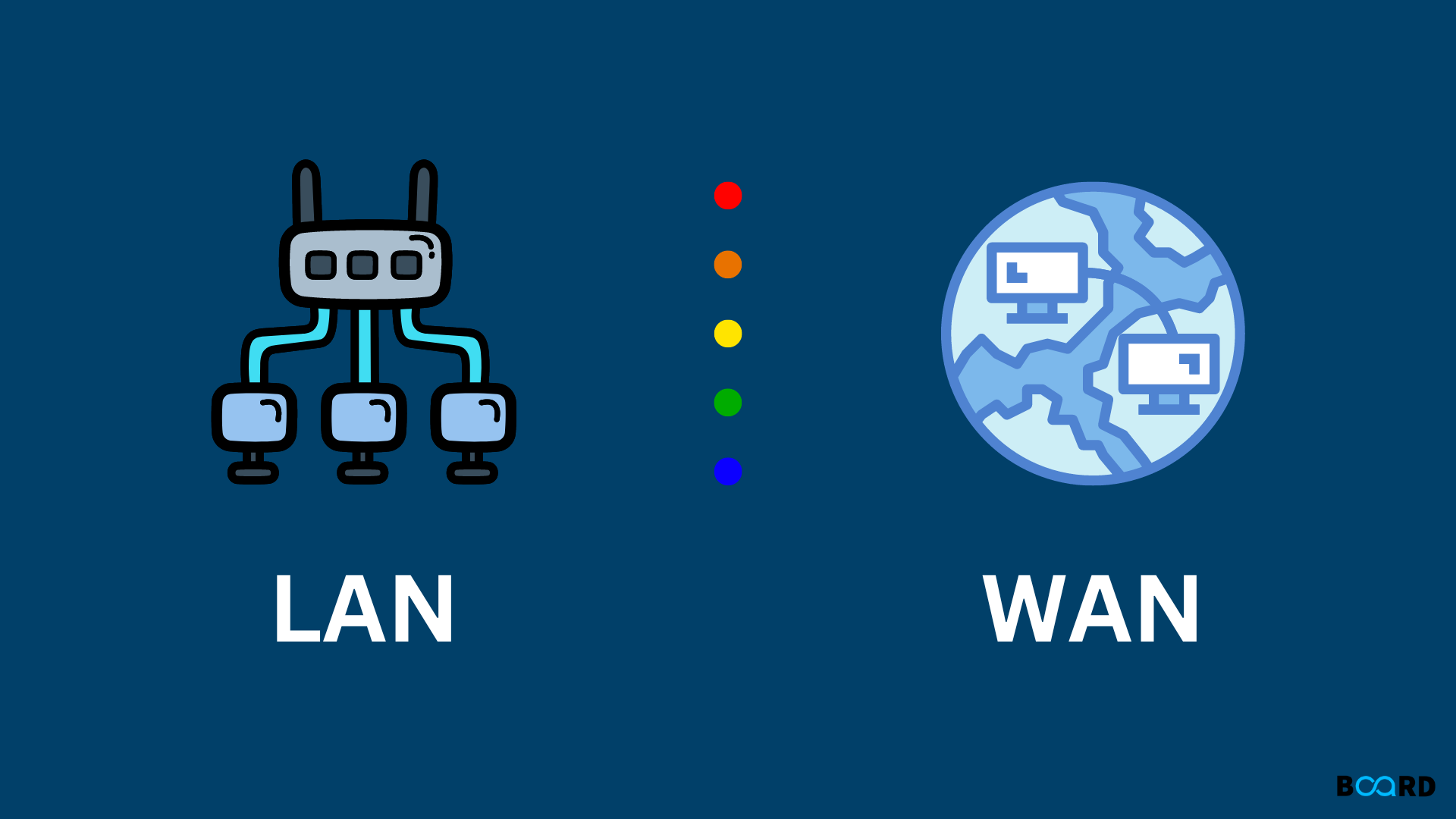
In our modern era, a computer network unquestionably forms the foundation of the majority of enterprises. The two most common kinds of computer networks are LAN and WAN. There are a few variations, though. We are going to talk about the main distinctions between LAN and WAN in this essay. Let's first clarify both terms using their definitions:
LAN
- A LAN is a collection of connected computers and other network devices that are located in a specific space, such as a home, a building, an office, a university, etc.
- It may be put up in a small geographic region without spending a lot of money, unlike other networks, and it is an extensively utilized network of devices.
- The most common application of LAN is to create a network for the sharing of resources like printers, scanners, or data like audio, video, movies, software, games, etc.
- An internal connection between a computer and a printer serves as the most basic example of a LAN. It is often a medium that facilitates a data flow between devices within a constrained region.

WAN
- Computers that are not near to one another are connected over a wide area network (WAN). LANs may be coupled with WANs, which is generally always the case. Small home or office networks can now link to larger networks, such as those that span state or national boundaries.
- Most WAN connections take place on leased lines or open networks like the phone network. The greatest WAN now in use is the Internet, which links computers all over the globe.

DISTINCTIONS BETWEEN LAN AND WAN
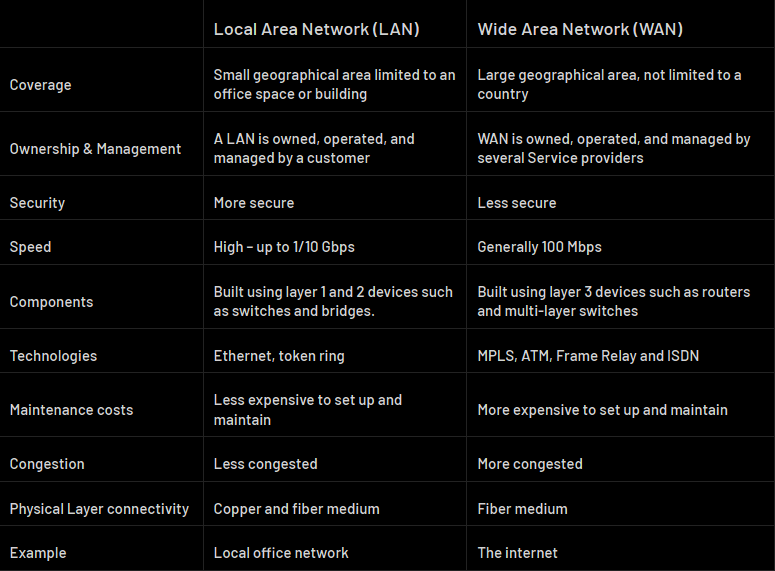
- A local area network, or LAN, is a network of computers created inside a restricted area, such as a home, business, or group of buildings. On the other hand, a wide-area network (WAN) is a computer network that spans a large geographic region.
- Users can transport data more quickly across LANs than they can via WANs, which have a significantly slower data transmission rate.
- WAN is slower than LAN and has a lower speed.
- While building, setting up, and maintaining WANs is challenging, it is very simple to do so with LANs.
- LANs have a high fault tolerance level, while WANs have a lower fault tolerance level.
Social Media as a Job Platform